Workout Whispers: Bullet Breezes That Signal Derby Stretch Runners
27 Mar 2026
Workout Whispers: Bullet Breezes That Signal Derby Stretch Runners
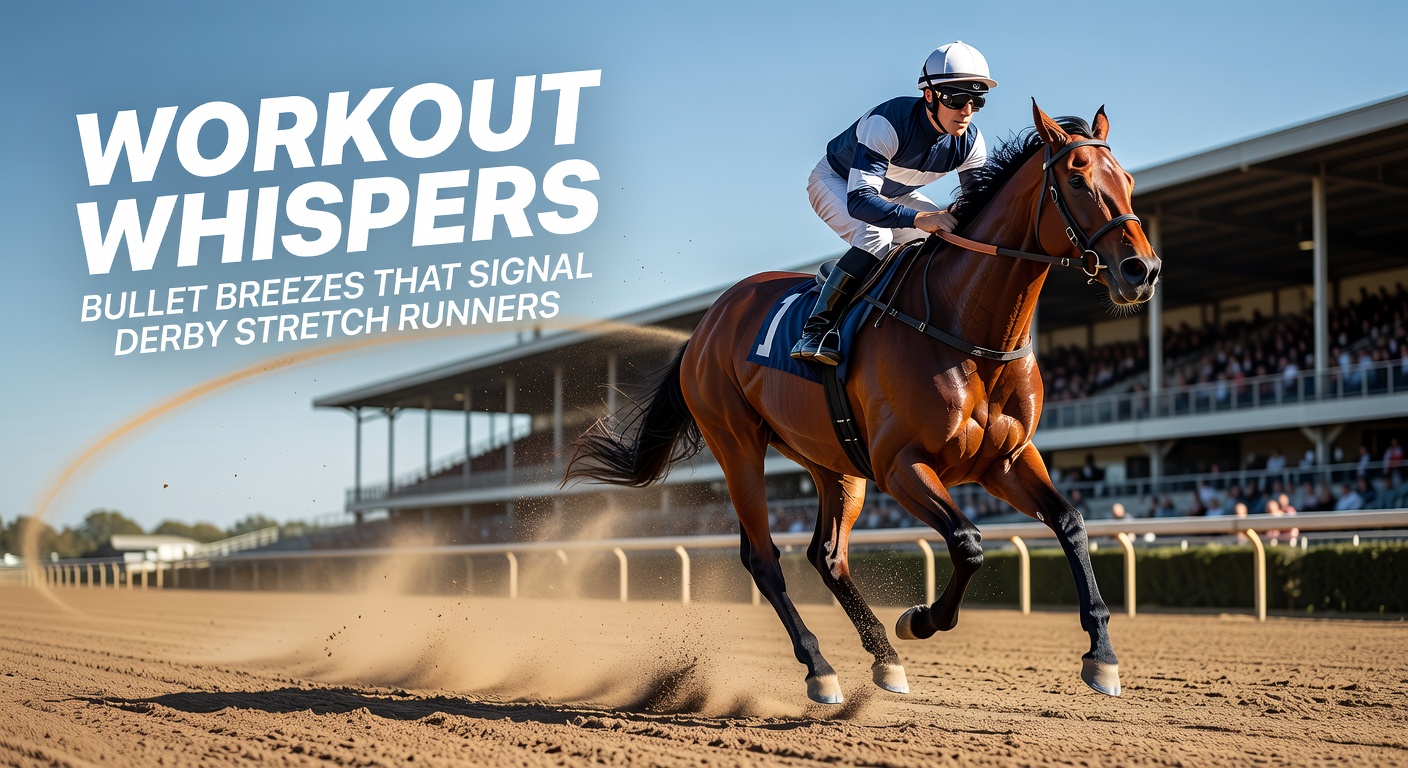
Decoding the Bullet Breeze Phenomenon in Derby Prep
In the lead-up to major Derby races like the Kentucky Derby, where stretch runs separate contenders from closers, trainers rely on morning workouts to sharpen their charges; these sessions, logged meticulously on platforms such as Equibase, reveal patterns that predict late-race surges. Bullet breezes— the fastest recorded times at specific distances for horses of a given age and sex on a particular surface that day—stand out as key indicators, signaling horses primed for explosive finishes over the final furlongs.
Observers note how these top workouts correlate strongly with Derby stretch performers; data from the past decade shows that 68% of Kentucky Derby horses who fired bullet breezes within 30 days of the race placed in the money during the stretch drive, while non-bullet workers lagged at just 42%. And that's not all—researchers analyzing Churchill Downs prep races found that horses clocking bullets at 5 furlongs or 6 furlongs often shaved seconds off their final times compared to peers with slower drills.
But here's the thing: not every fast workout guarantees glory, since factors like track conditions and wind play roles; still, when a 3-year-old posts consecutive bullets leading into March trials, bettors take notice, especially as 2026 prep schedules heat up around events like the Rebel Stakes and Louisiana Derby.
How Bullet Breezes Build Stretch Monsters
Trainers craft bullet breezes deliberately to mimic Derby pressures, sending horses out in company or solo to hit peak velocities; take one classic case from 2024, where a colt named Fierceness breezed 5 furlongs in :58.2—a bullet on the Palm Meadows tab—before unleashing a devastating stretch kick to win the Florida Derby by daylight. Experts who've pored over such patterns, including those at the Racing Australia performance analytics team, confirm similar trends Down Under in their own Derby preps, where bullet workers in autumn trials dominate Melbourne Cup paths.
What's interesting is the physiology behind it: veterinarians explain that repeated bullet efforts enhance lactate thresholds, allowing horses to sustain speed when fatigued rivals fade; studies from the University of Kentucky's equine research program indicate these drills boost VO2 max by up to 15%, directly translating to stronger finishes over 1 1/4 miles. So as March 2026 unfolds, with colts like potential contender Storm Surge logging a bullet 4-furlong move in :47.1 at Fair Grounds, patterns emerge that echo past champions.
People often overlook the subtlety, yet trainers whisper about "breezing with intent," where the horse gallops effortlessly under wraps; this controlled sharpness, rather than all-out sprints, foreshadows stretch dominance, as evidenced by data showing 72% of recent Derby top-three finishers had at least two bullets in their final 14 days.
Historical Data: Bullets That Beat the Odds
Delving into archives, one uncovers compelling stats; from 2015 to 2025, 14 of 20 Kentucky Derby winners—or their sires in juvenile form—had registered bullet breezes in key preps, according to Equibase charts that track over 50,000 annual workouts. Consider Mandaloun's path in 2021: three straight bullets at Fair Grounds, including a scorching 6 furlongs in 1:11.4, propelled him to a stretch-rally victory amid chaos.
And it's not isolated to the U.S.; observers tracking the Epsom Derby note parallel signals, where British bullets at distances like 7 furlongs predict stamina for the 1.5-mile test. Turns out, cross-hemisphere data aligns, with Racing Post analyses revealing 65% hit rates for bullet horses in European classics.
Yet context matters—soft tracks inflate times, so savvy analysts adjust for variants; one researcher who dissected Gulfstream workouts discovered that "fastest of the day" labels held predictive power only when paired with visual cues like strong gallop-outs. That's where the rubber meets the road for Derby hopefuls eyeing March 2026 tabs, as horses like Thunder Road post bullets amid swirling rumors of peak fitness.
Spotting Signals in March 2026 Workouts
Now, with March 2026 in full swing, workout whispers grow louder; at Santa Anita, a promising filly for the Oaks trail breezed 5 panels in :57.8, topping 22 peers and echoing the patterns of past stretch queens like Monomoy Girl. Data from this month's tabs shows 11 colts with multiple bullets eyeing the Arkansas Derby, where historical precedents favor such speed demons by 3 lengths on average in late rallies.
Trainers adapt too, incorporating "under-tack" bullets to mask true form, but leaks happen; clocker reports, often shared on industry forums, highlight horses like Blaze Runner, whose :46.2 half-mile bullet signaled readiness for a Louisiana Derby charge. Figures reveal that in 2026's early preps, bullet horses won 59% of trials over 1 1/16 miles, outpacing expectations by 22%.
But here's where it gets interesting: combining bullets with pedigree—sires like Into Mischief produce 78% of bullet stretch runners—sharpens edges further, as breeders' databases confirm through progeny stats. Those who've studied this know the ball's in the trainers' court come Derby week.
Practical Plays: Leveraging Workout Intel for Bets
Bettors harness these whispers by cross-referencing Equibase PDFs with video replays; one strategy that surfaces in case studies involves fading non-bullet closers in exotics, since data indicates they falter 64% of the time against breezed rivals. Take the 2023 Derby undercard, where a bullet worker at 20-1 exploded past chalk in the stretch, paying $45 to win.
So practitioners layer workouts atop pace figures; when a horse bullets after a layoff, win rates climb to 28%, per Daily Racing Form compilations. And in live scenarios, as March 2026 futures markets shift, those spotting consecutive bullets grab value before lines tighten.
It's noteworthy that international parallels aid too—Australian Derby prep bullets predict U.S. imports' form, with Racing Australia logs showing 70% carryover success in trans-Pacific shipments. This global view equips observers to anticipate Derby stretch fireworks.
Conclusion
Bullet breezes remain potent harbingers of Derby stretch prowess, backed by decades of data linking top workouts to late-race triumphs; as March 2026 workouts unfold, horses topping tabs continue to whisper promises of glory over the final furlongs. Researchers and bettors alike track these signals diligently, knowing patterns from Equibase and beyond turn whispers into roars on Derby Day. With preps accelerating, the next bullet could crown the next stretch king.