Weather Patterns Shape Goal Scoring Trends in Northern European Leagues
Iris Schmidt · Aug 27, 2026
Weather Patterns Shape Goal Scoring Trends in Northern European Leagues
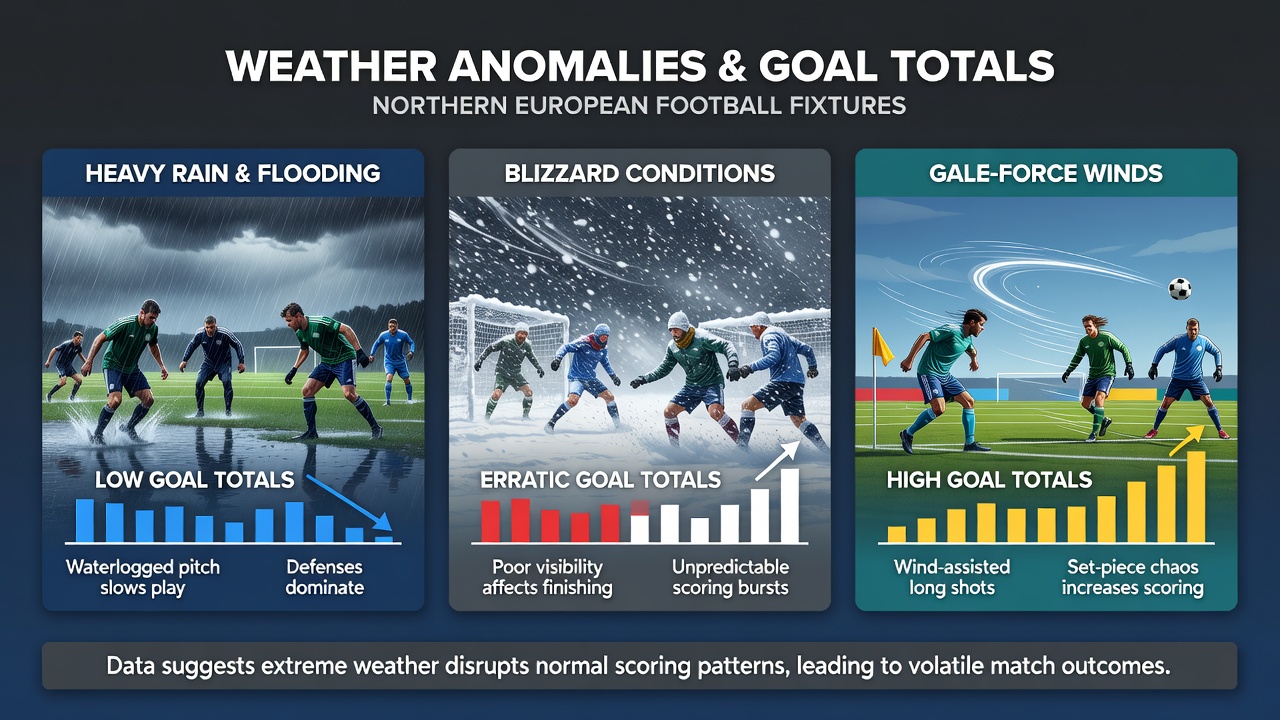
Northern European football fixtures often unfold under variable weather conditions that alter pitch surfaces, ball behavior, and player movement, which in turn influences the number of goals recorded in matches across leagues such as the Bundesliga, Eredivisie, and Scandinavian divisions. Researchers have documented how anomalies like unseasonal rainfall, stronger winds, and temperature swings modify game dynamics without changing team tactics directly. Data from recent seasons shows measurable shifts in average goals per game when these factors intensify, particularly during August when leagues resume and weather transitions remain unpredictable.
Common Weather Anomalies in the Region
Northern Europe experiences frequent shifts in precipitation and wind that stand out from historical averages, according to records maintained by the European Environment Agency. Heavy downpours turn grass pitches into slick surfaces while lighter but persistent rain creates uneven footing that disrupts precise passing sequences. Stronger gusts, which have increased in frequency during late summer periods, push long balls off course and reduce the effectiveness of set pieces. Temperature drops below seasonal norms, such as those observed in early August 2026 across parts of Germany and the Netherlands, make the ball harder and less responsive, leading players to favor shorter, safer distributions over expansive attacks.
Impact on Ball Movement and Pitch Conditions
Studies compiled by meteorological services in Scandinavia indicate that wet conditions reduce ball speed by up to 15 percent on natural turf, which forces teams to adapt their approach and often results in fewer through balls reaching the final third. Observers note that wind speeds above 25 kilometers per hour correlate with a decline in successful crosses, since the ball drifts unpredictably and goalkeepers gain extra time to organize defenses. Cold snaps stiffen the turf, increasing bounce and making low-driven shots more likely to skid past keepers, yet the same conditions can also limit the number of high-quality chances created because players tire faster from maintaining balance.
League-Specific Observations
In the Bundesliga, matches played during periods of elevated rainfall have produced lower average goal totals compared with dry fixtures, a pattern tracked across multiple campaigns by analysts at sports data firms. The Eredivisie, with its wider pitches and emphasis on possession, shows similar reductions when wind interferes with build-up play, although some teams compensate by switching to direct styles that occasionally yield more set-piece opportunities. Norwegian and Swedish leagues, which face sharper autumn transitions, record even clearer effects during August fixtures when sudden temperature changes coincide with the opening rounds of the season.
Statistical Patterns Across Recent Seasons
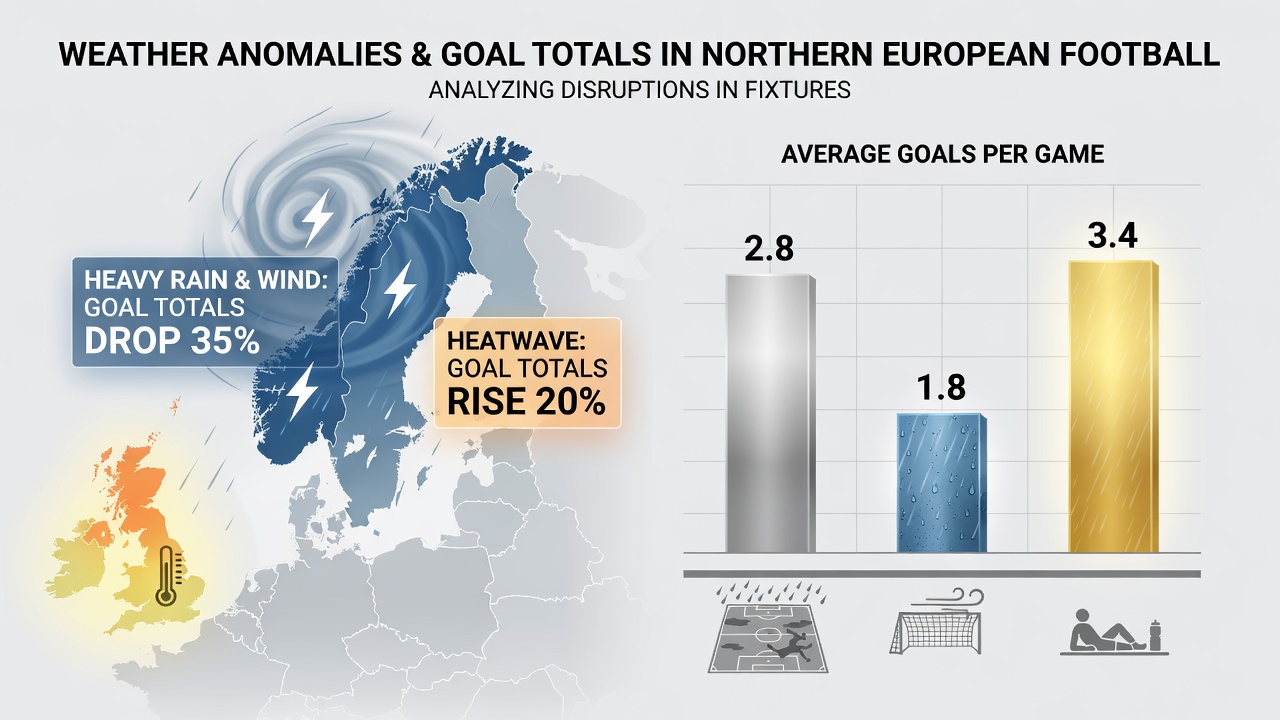
Figures released by the European Centre for Medium-Range Weather Forecasts combined with match data reveal that fixtures under anomalous rain see goal averages drop by roughly 0.4 per game in the top divisions. Wind-affected contests show a comparable dip, while unusually warm spells sometimes produce the opposite effect as pitches remain firm and favor quicker transitions. These correlations hold after controlling for team strength and venue, suggesting weather acts as an independent variable rather than a secondary factor. Teams that rely on high pressing appear more vulnerable to these changes because fatigue sets in sooner on compromised surfaces.
Player and Tactical Adjustments
Coaches respond to forecast anomalies by selecting players better suited to physical challenges, such as those with stronger aerial ability when wind or rain is expected. Midfielders shift toward simpler passes, which reduces turnovers but also limits creativity in the final third. Goalkeepers benefit from drier conditions through improved grip on the ball, whereas wet weather increases handling errors that occasionally lead to own goals or scrambles in the box. Data from training facilities in Northern Europe indicates that preparation time shortens when anomalies arrive suddenly, leaving squads with fewer opportunities to rehearse adjustments.
Conclusion
Weather anomalies continue to exert measurable influence on goal totals in Northern European football through their effects on pitch quality, ball trajectory, and player endurance. Records from meteorological and league sources demonstrate consistent patterns that repeat across seasons, including the period surrounding August 2026. Teams and analysts who incorporate these variables into performance models gain clearer insight into expected scoring ranges without relying on speculation about individual motivation or strategy shifts.