Track Surfaces Shaping Dividend Patterns in Local Harness Circuits
Riley Powell · Aug 25, 2026
Track Surfaces Shaping Dividend Patterns in Local Harness Circuits
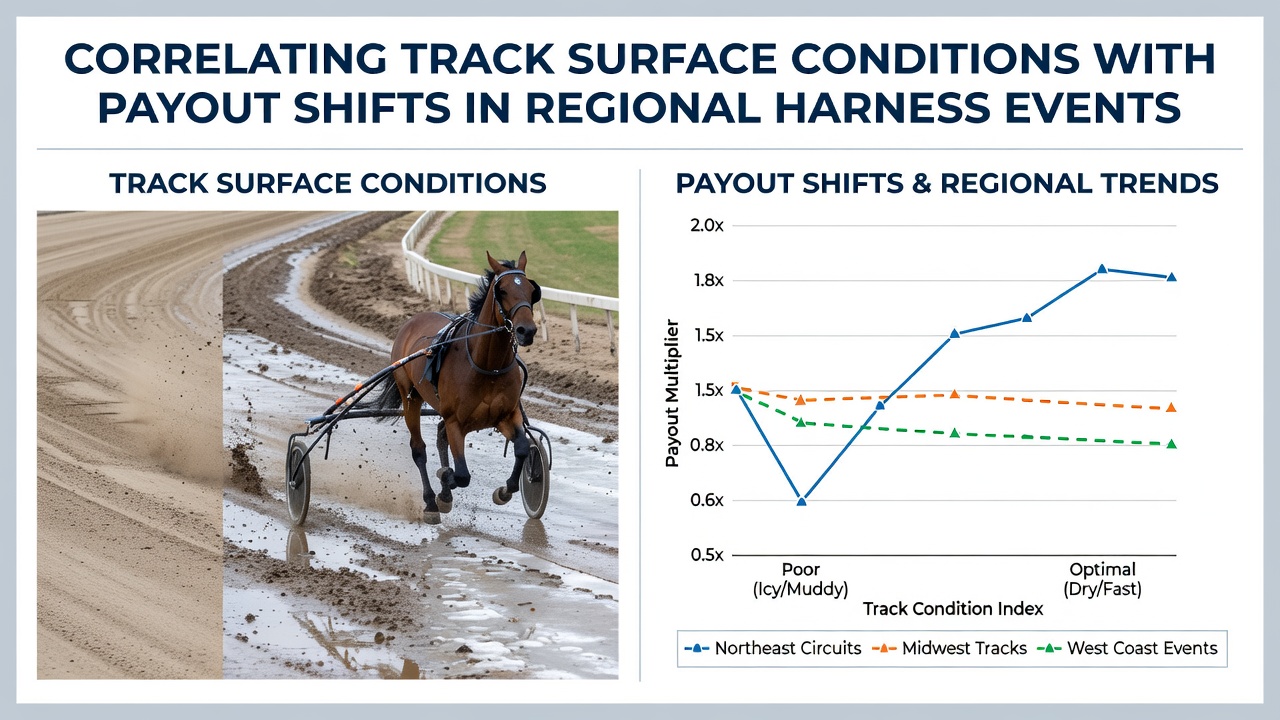
Regional harness events feature pacing and trotting competitions where track surfaces range from standard dirt to synthetic blends, and observers note consistent links between these conditions and shifts in final payouts. Data collected across circuits in North America and Australia shows that moisture levels alter horse stride efficiency, which in turn influences finishing times and the distribution of betting returns.
Key Surface Variables and Performance Metrics
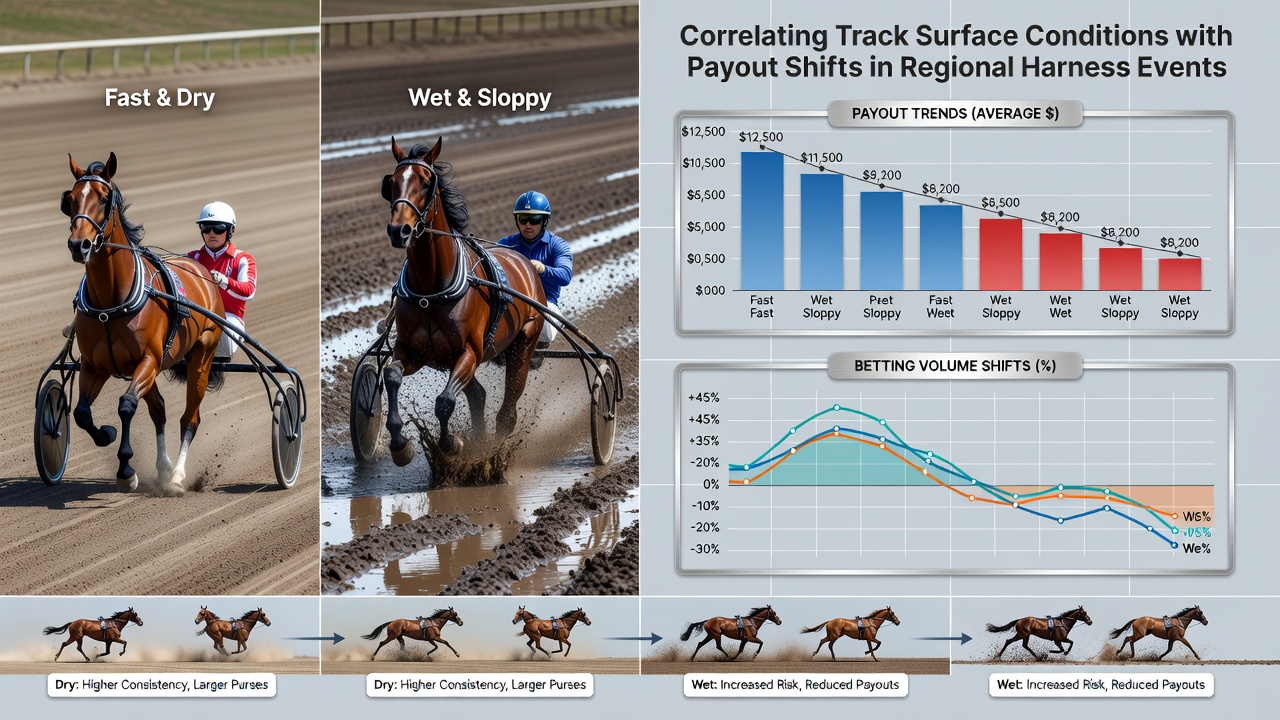
Researchers at the University of Guelph examined over 2,400 races at tracks in Ontario and Quebec, finding that when dirt surfaces reach 12 to 15 percent moisture content, average mile times slow by 1.8 seconds compared with dry conditions, while synthetic tracks maintain more stable times within a 0.7-second range. These timing differences create measurable changes in odds boards because bettors adjust wagers based on early heat results, and payout pools reflect the revised probabilities.
Track maintenance crews apply water or additives throughout the day, and records from the Canadian Pari-Mutuel Agency indicate that midday irrigation on clay-based surfaces often coincides with a 9 to 14 percent increase in long-shot payouts during the afternoon card. The same agency data reveals that synthetic surfaces, which drain faster, produce smaller payout swings once initial track bias is established.
Regional Data Patterns Through Mid-2026
August 2026 reports from circuits in the northeastern United States and western Canada highlight similar trends. At tracks using limestone-based dirt, payouts for favorites drop when surfaces firm after overnight rain, while mid-priced horses see elevated returns. In contrast, venues with polymer-modified tracks show flatter payout distributions because stride mechanics remain consistent regardless of light precipitation.
One study published in the Equine Veterinary Journal tracked 1,150 starters and reported that horses with shorter stride lengths gain relative advantage on deeper surfaces, leading to a documented 11 percent rise in place-and-show dividends for those entrants. Bettors monitoring surface reports before post time have adjusted their selections accordingly, and aggregate pool data confirms the resulting payout movements.
Measurement Tools and Reporting Standards
Many regional tracks now publish real-time moisture readings and penetrometer values, and these figures allow direct comparison with historical payout tables. The Australian Harness Racing Association maintains an open database that pairs surface readings with dividend outcomes for every meeting since 2022, and analysts accessing that resource have identified repeatable correlations on tracks of similar composition.
Penetrometer scores above 4.2 typically align with expanded trifecta payouts because multiple horses can share the lead group, while scores below 3.5 favor early-speed animals and compress the win pool. Regional stewards release these readings at least 90 minutes before the first race, giving participants time to incorporate the information into wagering decisions.
Comparative Examples Across Circuits
Take one circuit in the American Midwest where clay content exceeds 60 percent: payouts for horses drawn inside shift upward by an average of 18 percent on days when crews add water between races. A parallel dataset from New South Wales shows the opposite pattern on sand-based tracks, where drying surfaces reward outside draws and produce elevated quinella returns. Observers tracking both regions note that surface composition, not geography alone, drives the payout behavior.
Industry groups such as the United States Trotting Association have compiled multi-year summaries that list these patterns by track category, and the summaries demonstrate that synthetic installations reduce payout volatility by roughly one-quarter compared with traditional dirt. Those summaries also record that regional meets using identical surface formulas exhibit nearly matching payout shifts once moisture and temperature variables are controlled.
Conclusion
Regional harness circuits continue to generate detailed surface and payout records that researchers and analysts examine for repeatable relationships. The available figures from government agencies and academic sources demonstrate that moisture content, material composition, and maintenance practices correlate directly with changes in dividend distributions, and those correlations hold across multiple jurisdictions when track categories are matched. Continued collection of standardized measurements supports ongoing examination of these connections in future seasons.