Seasonal Winds Reshaping Track Biases Across Thoroughbred Racing Circuits
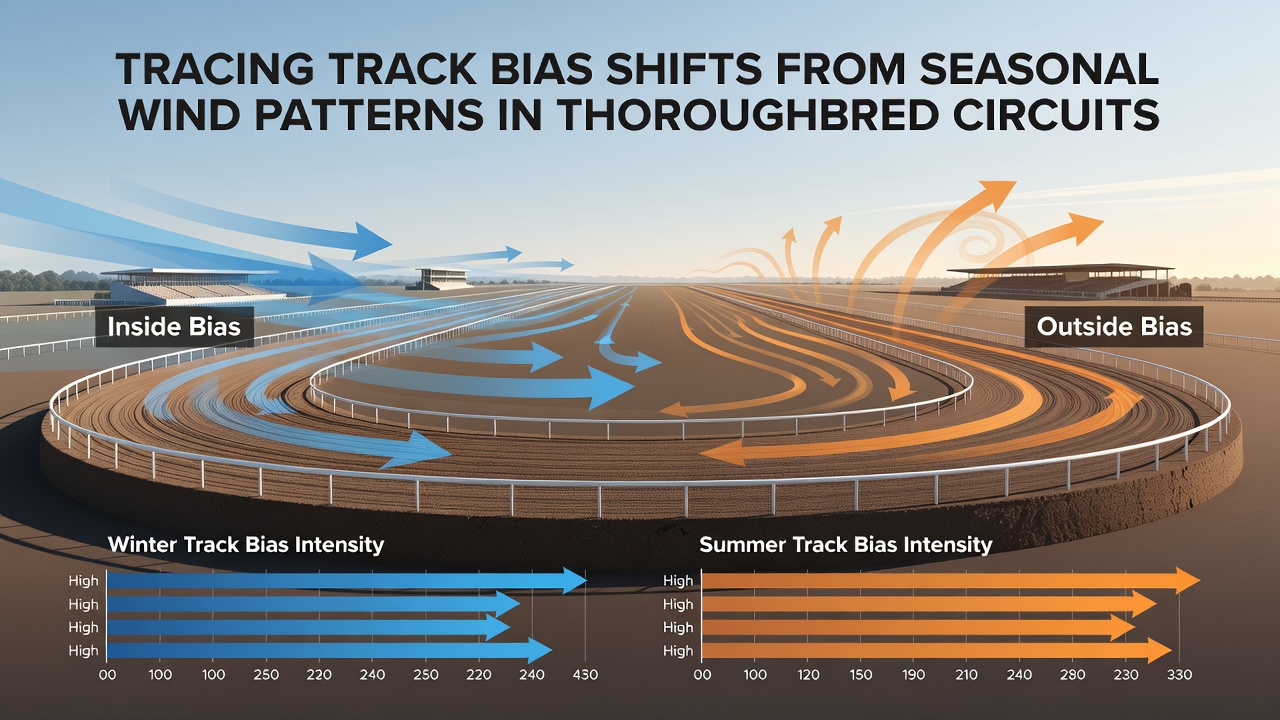
Thoroughbred racing circuits worldwide experience measurable shifts in track bias when seasonal wind patterns change direction and intensity, and researchers tracking these variables have documented consistent patterns at venues from North America to Australia and Europe. Meteorologists and racing analysts combine wind data with performance records to identify how prevailing breezes alter surface moisture, footing consistency, and lane advantages on turf and dirt courses alike.
Wind Direction and Surface Interaction Basics
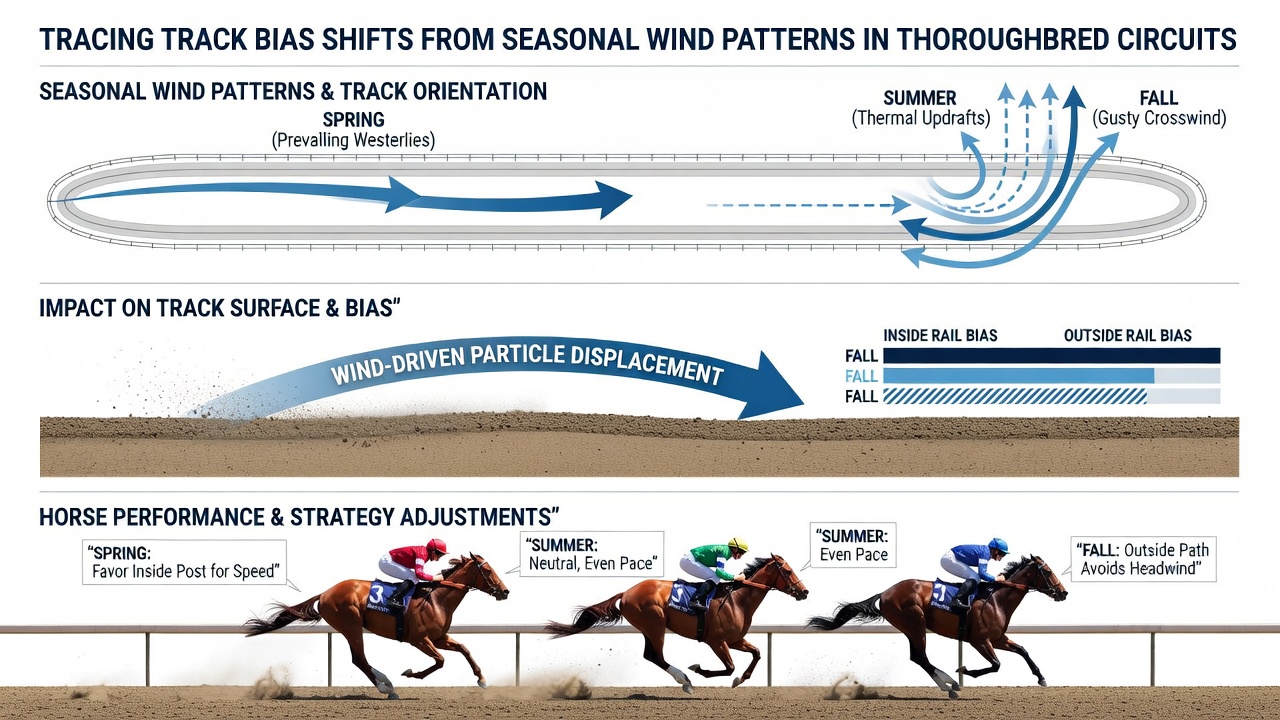
Prevailing winds influence how moisture distributes across racing surfaces, which in turn affects which sections of the track provide firmer or softer footing during specific months, and data collected by racing authorities shows that tailwinds on the home straight often favor inside runners while crosswinds push runners toward the outside rail. Observers note that these effects appear most pronounced during transitional seasons when wind patterns shift from winter to spring or summer to autumn.
North American Examples and Data Trends
Tracks in the United States and Canada have recorded performance variations tied to jet stream movements, with studies from the National Oceanic and Atmospheric Administration indicating that springtime westerly winds at certain Midwest and East Coast venues create drier conditions along the inside rail. Analysts who examined race results from 2020 through 2025 found that horses breaking from inside posts posted higher win percentages during periods of consistent westerly flow compared to months dominated by southerly winds that redistribute moisture more evenly across the course.
International Circuits and Comparable Patterns
Australian racing bodies have tracked similar phenomena at major venues where seasonal trade winds interact with coastal tracks, and reports from the Bureau of Meteorology demonstrate that summer easterlies often compact sand-based surfaces on the outside lanes while leaving inside paths looser. In Europe, racing analysts at several French and Irish tracks have noted that autumnal northerlies coincide with increased times on the straight sections, prompting trainers to adjust workout schedules accordingly. These observations align with broader meteorological records showing how regional wind regimes shape local microclimates at each circuit.
July 2026 has brought renewed attention to these dynamics as multiple circuits prepare for peak summer racing schedules, and forecasters anticipate stronger westerly flows across the Northern Hemisphere that could further accentuate existing bias trends at dirt tracks in particular. Racing operations teams now incorporate real-time wind data into daily track maintenance decisions to maintain consistent racing conditions despite changing atmospheric patterns.
Measurement Techniques and Analytical Approaches
Modern tracking systems combine anemometer readings with sectional timing technology to quantify how wind speed and direction correlate with split times at various points around the course, and several academic studies have validated these correlations through multi-year datasets. Researchers apply regression models that factor in temperature, humidity, and precipitation alongside wind variables to isolate the specific contribution of seasonal wind shifts to observed performance differences. Those who have reviewed the resulting datasets report that wind effects account for measurable portions of variance in finishing positions, especially on turf courses where grass length and soil compaction respond directly to airflow patterns.
Practical Applications for Racing Professionals
Trainers and jockeys review historical wind and performance data when preparing entries for races scheduled during known seasonal transitions, and several large stables now maintain internal databases that flag circuits where wind-driven bias shifts have historically produced predictable lane advantages. Handicappers who integrate meteorological forecasts into their analysis adjust speed figures and pace projections to reflect anticipated surface changes rather than relying solely on past race outcomes. These methods have gained wider adoption as more venues publish detailed track maintenance logs alongside official weather summaries.
Future Monitoring and Data Integration
Continued expansion of sensor networks at racetracks worldwide will provide higher-resolution data on how seasonal wind patterns interact with track geometry and surface composition, and collaborative projects between meteorological agencies and racing organizations aim to refine predictive models. Such integration allows circuit managers to anticipate bias shifts days or weeks ahead and schedule maintenance interventions that mitigate extreme variations in footing. Evidence from ongoing pilot programs suggests these proactive approaches reduce day-to-day inconsistencies that previously affected race outcomes during wind pattern transitions.
Conclusion
Seasonal wind patterns exert documented influence on track biases throughout thoroughbred racing circuits, and systematic collection of meteorological and performance data has enabled precise identification of these relationships across multiple regions. Continued refinement of measurement techniques and cross-institutional data sharing will further clarify how wind-driven surface changes affect race dynamics, providing racing professionals with additional tools for preparation and analysis.