Referee Penalty Patterns Revealed Through Assignment Tracking in European Leagues
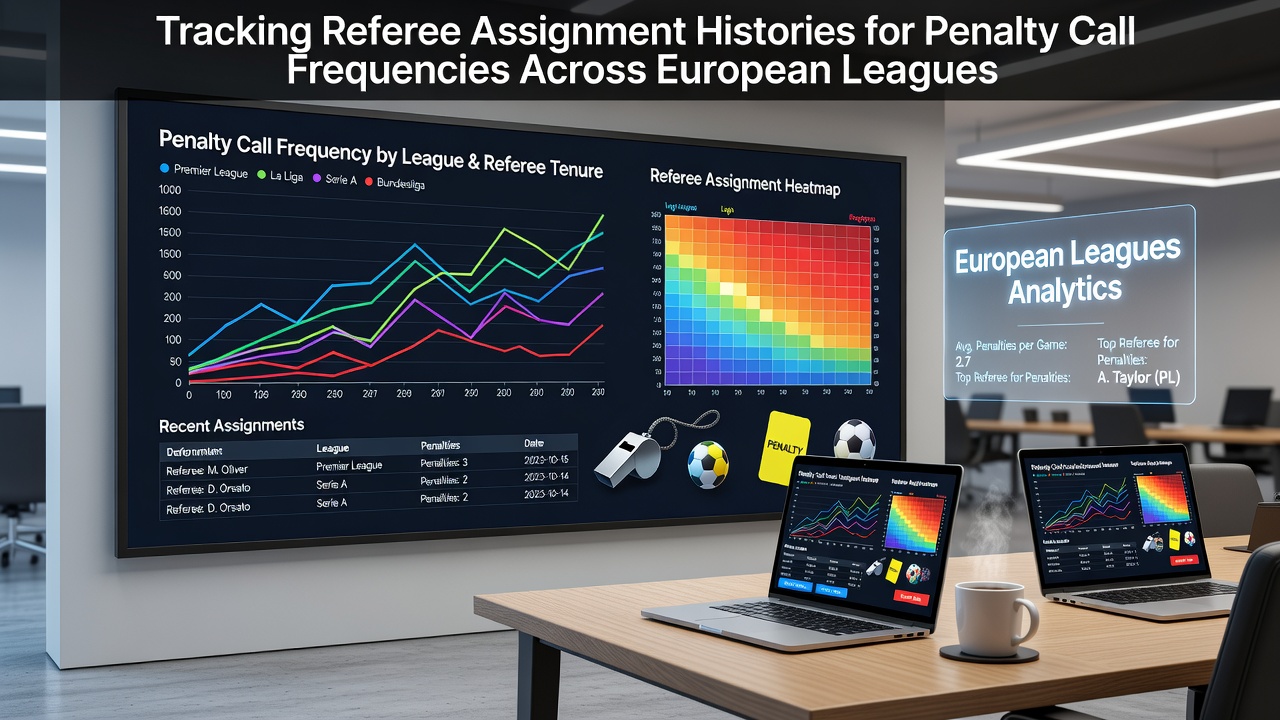
European football leagues maintain detailed records of referee assignments and their associated penalty call rates, creating datasets that span multiple seasons across competitions like La Liga, Serie A, Bundesliga, and Ligue 1. Analysts compile these histories by logging each official's matches, then cross-referencing outcomes such as penalties awarded per game and distribution between home and away sides. This approach allows observers to identify consistent trends rather than isolated incidents, with data covering thousands of fixtures from 2015 onward.
Methods for Collecting Referee Assignment Data
Organizations gather information through official match reports submitted to league authorities, supplemented by video reviews and performance evaluations from bodies such as the Royal Spanish Football Federation and the Italian Football Federation. Researchers categorize referees by experience level, then calculate frequencies using metrics including penalties per 90 minutes and conversion rates on spot-kick opportunities. These calculations rely on standardized criteria that exclude subjective elements like perceived foul severity, focusing instead on raw counts verified across multiple sources.
Tracking extends to contextual factors including venue, team styles, and time of season, which helps isolate variables that influence call volumes. For instance, data from the Bundesliga shows certain officials issue higher penalty totals during high-tempo encounters, while Serie A records indicate lower rates in defensively oriented fixtures. July 2026 marks the start of pre-season preparations where leagues update assignment protocols based on prior year statistics, incorporating new technology for real-time verification.
Penalty Frequency Variations Across Leagues
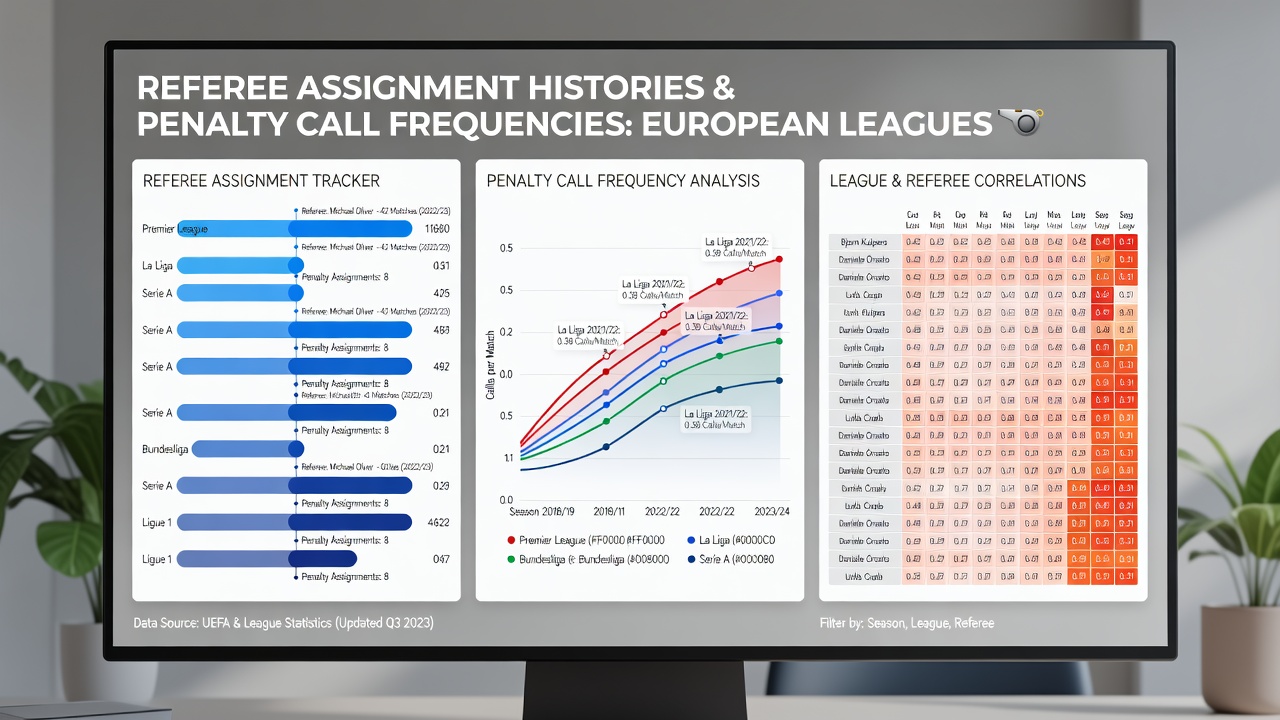
Comparative analysis reveals distinct patterns when examining referee histories side by side. In La Liga, officials with extensive assignments average 0.28 penalties per match over five seasons, whereas Bundesliga counterparts reach 0.35 in similar sample sizes. Serie A figures sit lower at 0.22, reflecting league-wide emphasis on physical play that reduces certain infringement types. Ligue 1 data aligns closely with La Liga averages yet shows spikes during congested midweek rounds when fatigue affects decision-making.
These differences persist even after accounting for rule changes introduced by UEFA in 2023, which clarified handball and foul thresholds. Assignment histories further demonstrate that repeat pairings between specific referees and teams correlate with stable call rates, suggesting familiarity influences consistency more than random variation would predict.
Case Examples From Recent Seasons
One documented case involves a veteran Bundesliga referee whose assignment log from 2021 to 2025 lists 142 matches and 47 penalties, yielding a rate above the league mean. Cross-league comparisons place this figure against Serie A officials handling comparable fixtures, where totals remain closer to 32 penalties across the same volume. French league records highlight another official whose history shows elevated home-team awards during the 2024-25 campaign, a pattern that shifted after assignment adjustments in the following term.
Academic reviews, including work from institutions in Spain, examine these histories through regression models that control for team strength and match importance. Results indicate referee-specific tendencies hold across borders when normalized for league differences, providing a framework for ongoing monitoring programs.
Integration With Broader Performance Metrics
Penalty tracking combines with additional indicators such as card issuance and added-time distributions to build comprehensive profiles. European governing structures compile annual summaries that feed into training modules for officials, emphasizing areas where frequency deviations exceed expected ranges. Data from the 2025-26 season, updated through early summer 2026, shows continued refinement in assignment algorithms that prioritize balance across referee pools.
International bodies like UEFA contribute aggregated statistics that allow leagues to benchmark against continental standards. These reports cover penalty trends in Champions League and Europa League matches, revealing overlaps with domestic league patterns for shared officials.
Conclusion
Systematic examination of referee assignment histories delivers measurable insights into penalty call frequencies across Europe's primary leagues. The accumulated evidence supports continued investment in data infrastructure that connects individual performance logs with league-wide outcomes, facilitating adjustments that maintain competitive equity. As protocols evolve through 2026 and beyond, these tracking systems remain central to understanding decision patterns in professional football.