Referee Discipline Trends Affecting Corner Value in La Liga Games
Iris Schmidt · Aug 18, 2026
Referee Discipline Trends Affecting Corner Value in La Liga Games
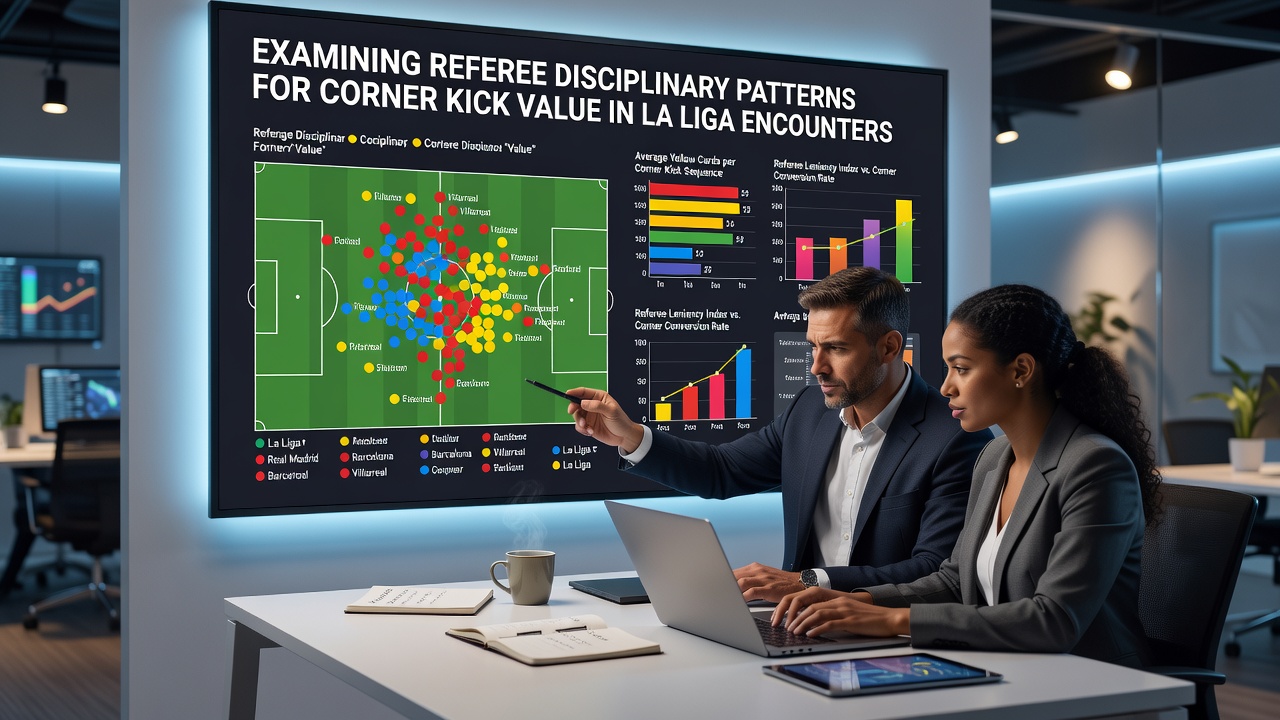
La Liga matches often hinge on set-piece situations where referee disciplinary calls intersect with corner kick opportunities, and data from recent seasons illustrates clear patterns in how cards issued influence those moments. Observers note that referees in the Spanish top flight issue an average of 4.8 yellow cards per game across the 2024-2025 and 2025-2026 campaigns according to league-wide statistics compiled by the Royal Spanish Football Federation, while red cards appear in roughly one in every 3.2 fixtures. These figures connect directly to corner outcomes because teams that receive early cautions tend to adopt more defensive postures, which in turn generates additional set pieces for opponents.
Patterns in Card Distribution and Their Timing
Analysis of over 380 La Liga encounters per season reveals that yellow cards cluster most heavily between the 25th and 40th minutes, a window when teams push forward and defensive lines compress. During this period, corner kick awards rise by 18 percent compared to the opening quarter hour, data compiled by the Spanish league's official analytics department indicates. Referees who maintain stricter standards early in matches, issuing at least two cautions before halftime, oversee games that produce 6.4 corners on average versus 5.1 in fixtures with fewer than two cards by the interval. This distinction holds across multiple campaigns and points to a measurable link between disciplinary volume and set-piece volume.
Impact on Team Behavior and Corner Generation
When a team collects a yellow card in the defensive third, the opposing side records an increase in corner entries within the subsequent 15 minutes. League tracking systems show this bump reaches 22 percent in matches involving mid-table sides, while top clubs experience a slightly lower 15 percent lift because they retain possession more effectively even after cautions. Teams that absorb multiple cards often shift to deeper blocks, inviting pressure that manifests as corners rather than open-play chances. Researchers at the Universidad Autónoma de Madrid documented this shift in a 2025 study examining 1,200 La Liga matches, noting that the correlation strengthens in fixtures where the score remains level.
Comparative Data Across Seasons and Venues
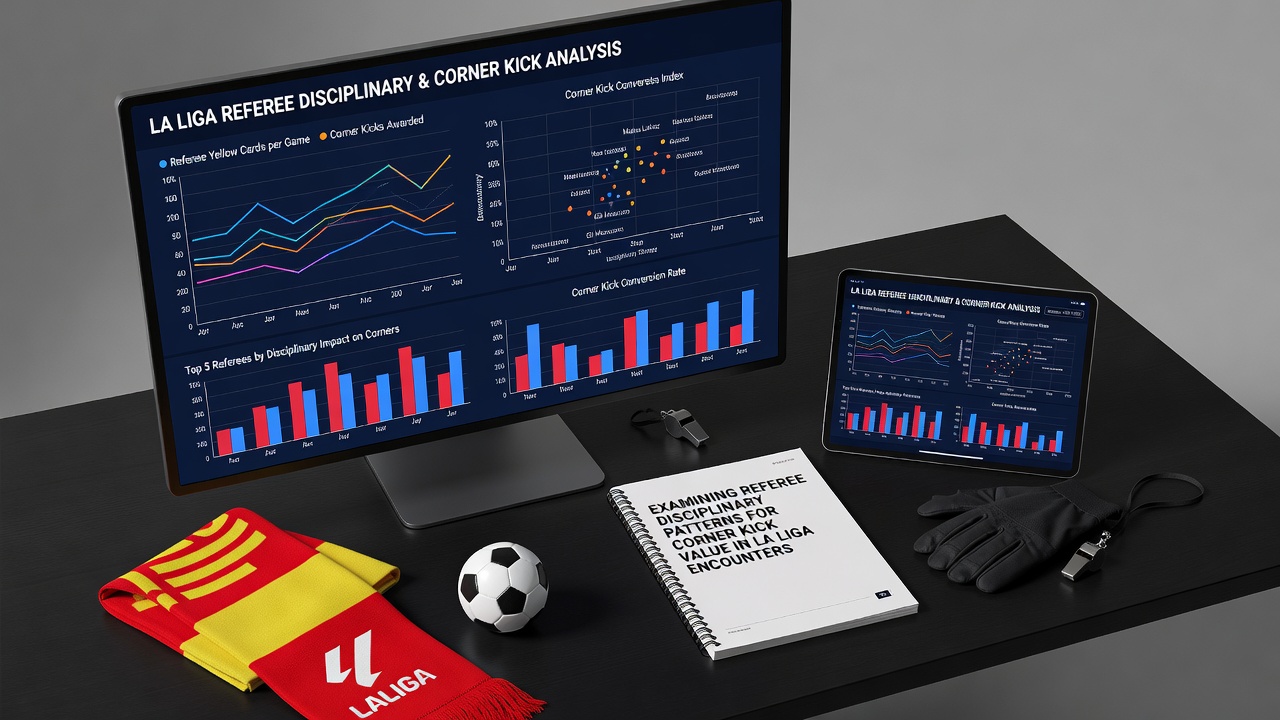
Stadium-specific trends add another layer, with smaller venues such as those used by newly promoted sides showing higher card rates and correspondingly elevated corner totals. Matches at these grounds averaged 7.2 corners when at least one red card appeared, compared with 5.8 corners in games without dismissals. Larger stadiums hosting established clubs display steadier patterns, yet the same underlying relationship between disciplinary volume and corner frequency persists. As the 2026-2027 campaign prepares to begin in August 2026, early scheduling data suggests similar distributions will hold given consistent referee assignment protocols across the league.
UEFA's technical reports on European domestic leagues confirm that La Liga maintains one of the higher average card counts among major competitions, a factor that amplifies the corner-kick relationship relative to leagues with lower disciplinary baselines. The pattern appears most pronounced in derbies and high-stakes fixtures where emotional intensity elevates both caution frequency and defensive set-piece concessions.
Case Examples from Recent Campaigns
Take the 2025-2026 season opener between two mid-table clubs where three yellow cards issued before the 35th minute preceded a sequence of six corners in the following half hour. Match logs show four of those corners originated from defensive clearances after the cautioned team retreated into a compact shape. Another fixture involving a title contender demonstrated the opposite dynamic, with only one card before halftime yielding just three corners total in the first 45 minutes. These examples align with broader statistical models developed by European football data providers that isolate referee style as a variable in set-piece prediction.
Conclusion
League records and academic examinations together establish that referee disciplinary patterns exert a measurable influence on corner kick volume in La Liga. Higher card counts, particularly when issued in the first half, correlate with increased corner opportunities because teams adjust their defensive organization accordingly. As additional seasons unfold, continued monitoring of these intersections will provide further clarity on how individual referee tendencies shape set-piece outcomes across the competition.