21 May 2026
How Rain Reshapes Football Pitches and Accumulator Results in Wet Fixtures

Football accumulators thrive or collapse based on multiple outcomes lining up across several matches, yet rain introduces variables that alter pitch behavior and shift those probabilities in measurable ways. Waterlogged surfaces slow the ball, reduce bounce, and favor teams that prioritize possession retention over rapid transitions, which changes goal tallies and clean sheet rates that bettors rely on when building their slips.
Physical Changes to the Playing Surface
Heavy rainfall saturates the turf, creating a layer of standing water that increases friction and reduces the speed at which passes travel across the ground. Groundskeepers at major stadiums apply sand and aeration treatments in advance, yet once precipitation exceeds certain thresholds the pitch surface compacts differently and players experience inconsistent footing. Data from European competitions shows that matches played after sustained downpours record lower average pass completion rates in the final third, because forward players struggle to control the heavier, wet ball during one-touch sequences.
Player Movement and Injury Patterns
Accelerations become shorter and more cautious when studs sink into softened ground, which cuts the frequency of high-intensity sprints that usually produce open play goals. Medical staff report elevated ankle and knee strains in these conditions, although the overall injury count per fixture remains comparable to dry-weather games because teams adjust their warm-up routines accordingly. Observers note that central defenders, who cover more ground in a sliding or jockeying posture, absorb more of the physical toll when the surface turns slippery.
Statistical Shifts in Match Outcomes
League-wide records compiled over multiple seasons reveal that rain-affected fixtures produce fewer total goals on average, with the over-2.5-goals market hitting at reduced rates compared with the seasonal norm. Both teams to score also registers lower percentages, because attacking moves stall more often in the final twenty meters and shots from distance become the primary route to scoring. Researchers tracking these patterns across the top five European leagues found that home sides maintain their win percentage reasonably well, yet the margin of victory narrows as visiting teams settle into compact defensive blocks that exploit the slower tempo.
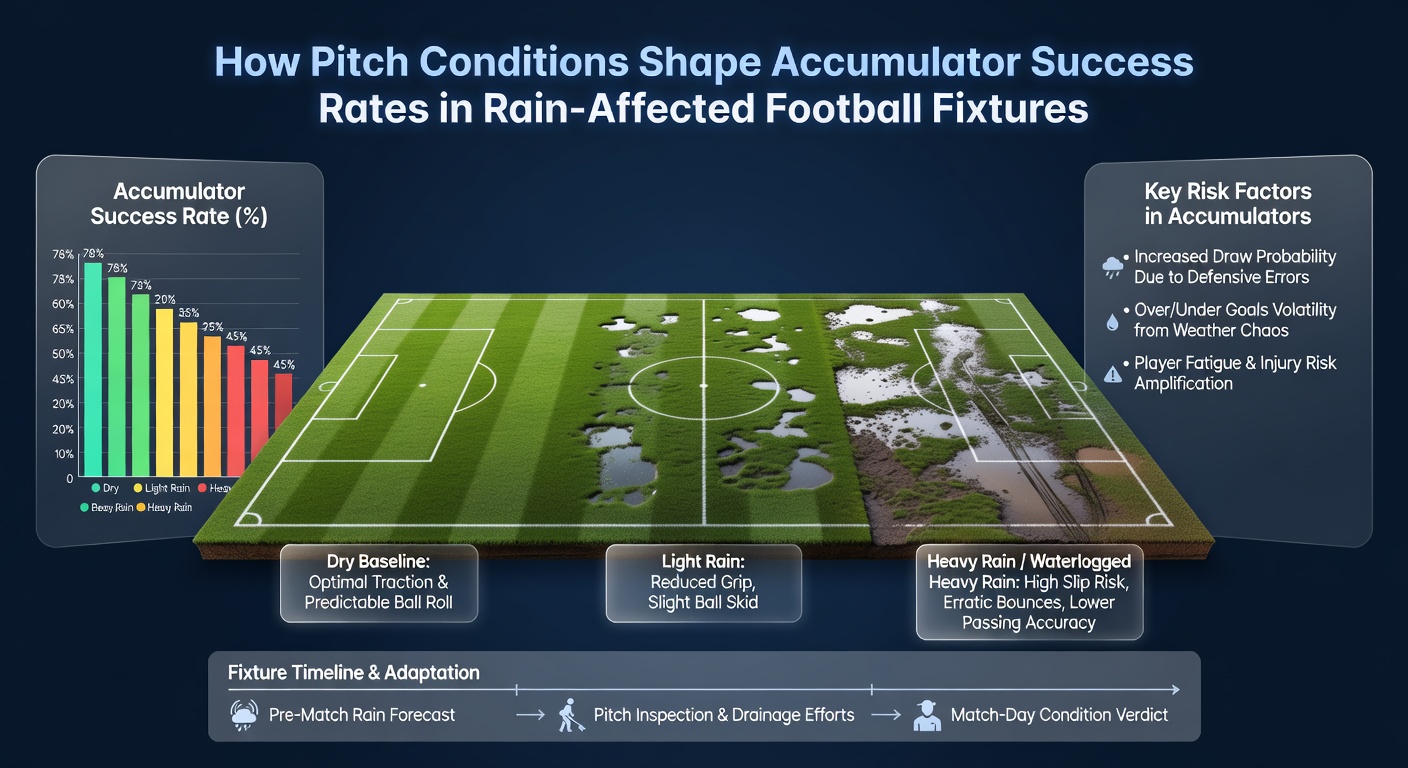
Accumulators that combine over-2.5 goals from several matches therefore face compounded risk when more than one fixture occurs under heavy rain. Bettors who monitor pitch inspections and local weather forecasts in the hours before kickoff adjust their selections toward under-2.5 goals or draw outcomes instead, which historically improves the hit rate for multi-leg slips during prolonged wet spells.
Strategic Adjustments by Teams and Bettors
Coaches respond to the changed surface by instructing full-backs to tuck in and midfielders to play shorter combinations, which reduces crossing volume and favors teams with strong technical midfielders. These tactical tweaks translate directly into fewer corners and set-piece opportunities, another data point that accumulator builders incorporate when selecting goal-related props. Analysts at performance tracking firms have documented a measurable uptick in long-range attempts and a corresponding drop in expected goals from inside the penalty area once rain begins to fall steadily.
Those constructing accumulators therefore examine historical head-to-head results in similar weather rather than relying solely on current form tables. When multiple matches on a given day share comparable rainfall forecasts, the collective shift toward lower-scoring outcomes creates a cluster effect that either boosts or busts an entire slip depending on whether the bettor anticipated the change.
Regional Weather Influences in 2026 Fixtures
By May 2026, late-spring weather patterns across northern Europe and parts of South America continue to produce sporadic heavy showers that coincide with the closing weeks of domestic leagues and early stages of continental finals. Fixture schedulers attempt to move kickoff times to avoid peak rainfall windows, yet afternoon and evening slots still encounter sudden downpours that ground staff cannot fully mitigate. Betting operators release updated pitch-condition reports through their platforms, allowing users to review updated statistics before finalizing accumulator selections on those specific dates.
Academic studies from sports science departments at universities in Germany and Australia have examined how soil moisture levels correlate with match statistics, confirming that once ground saturation passes a critical point the number of successful dribbles declines while the percentage of passes played backward rises. These findings provide quantifiable inputs for models that forecast accumulator viability under forecast rain.
Conclusion
Accumulator success rates in rain-affected fixtures depend on the accurate assessment of how water alters ball movement, player positioning, and ultimately the distribution of goals and cards. Teams adapt their tactics, statisticians record the resulting deviations from seasonal averages, and bettors who integrate pitch and weather data into their selections gain a measurable edge over those who treat every match as a standard dry-weather proposition. Continued collection of granular performance metrics during wet conditions will refine these insights further as future seasons unfold.