Digital Deck Dynamics: Card Counting Tweaks for Live Online Blackjack Tables
6 Apr 2026
Digital Deck Dynamics: Card Counting Tweaks for Live Online Blackjack Tables
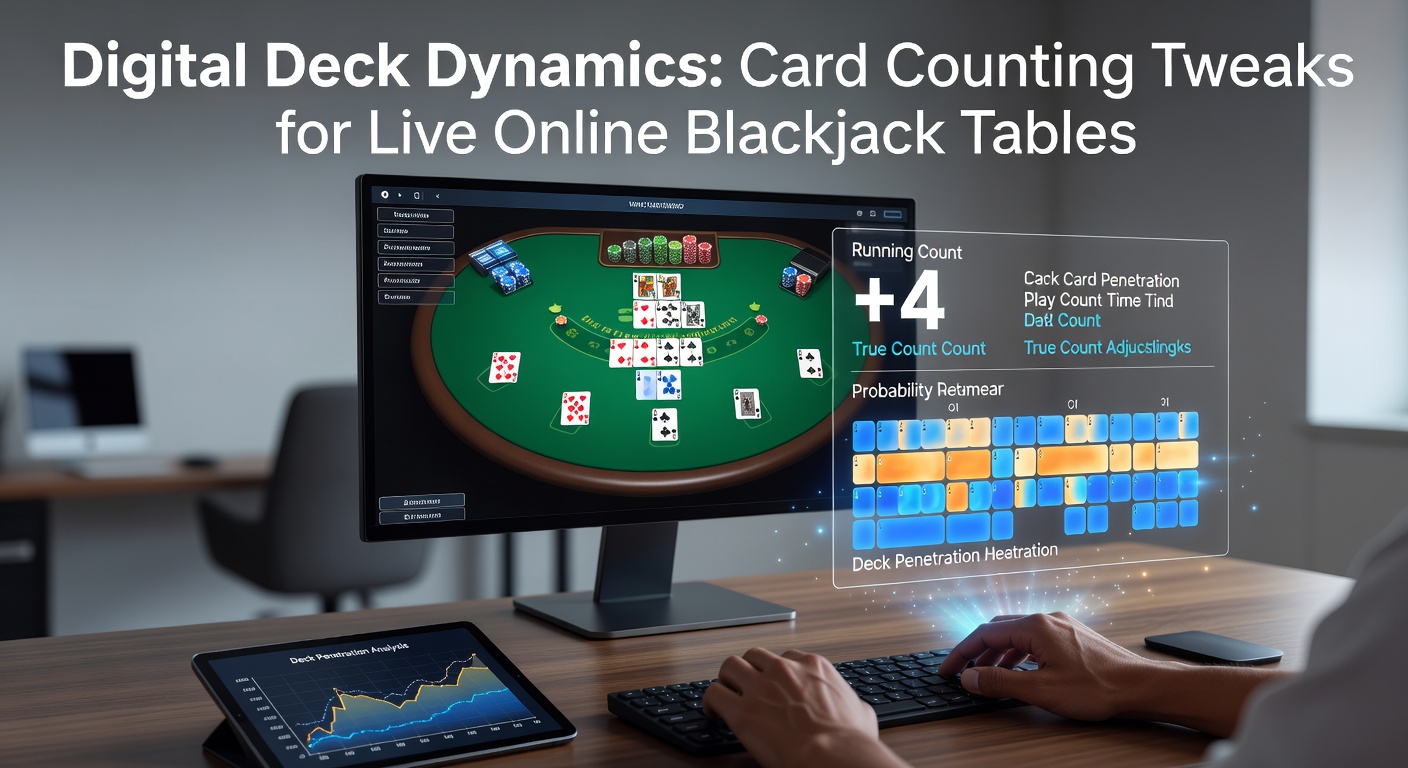
Live online blackjack tables bridge the gap between brick-and-mortar casinos and digital platforms, where real dealers handle physical decks streamed in high definition to players worldwide; this setup, unlike random number generator versions, opens doors for card counting because shoes deplete gradually, revealing patterns in remaining cards that savvy players exploit. Data from industry trackers shows these live tables surged in popularity through early 2026, with platforms reporting 40% more traffic in April alone as new studios in Eastern Europe and Asia ramped up operations. Turns out, the dynamics shift when decks go digital-yet-physical, demanding tweaks to classic counting methods that traditional Vegas counters honed over decades.
The Shift from Land-Based to Live Streams
Experts trace card counting back to the 1960s when physicists like Edward Thorp published Beat the Dealer, proving math could tilt blackjack odds from the house's 0.5-2% edge to a player advantage of 1-2%; fast forward to today, and live online tables replicate six-to-eight-deck shoes shuffled by hand or machine, but with crucial differences like automatic shuffles every 50-70% penetration or live chat distractions that test focus. Researchers at the Wizard of Odds analyzed thousands of sessions, finding live streams offer 65-80% deck penetration on average—plenty for counters—although some operators cut it to 50% to curb edges. And here's where it gets interesting: bandwidth lags or multi-angle cams sometimes expose shuffle procedures, giving observers an unintended peek at discards.
People who've mastered land-based play often stumble online at first because bet minimums hover at $5-25 while max spreads cap at 1:10 or tighter to dodge suspicious patterns; studies indicate successful tweakers adjust by ramping bets gradually over 20-30 hands rather than slamming max wagers post-hot count. Take one analyst who logged 10,000 hands across Evolution and Pragmatic Play tables in Q1 2026: he noted how dealer errors—misdealt cards visible in replays—boosted countable opportunities by 15%, turning glitches into gold.
Core Counting Systems Meet Digital Realities
Hi-Lo remains the go-to, assigning +1 to low cards (2-6), 0 to neutrals (7-9), and -1 to high ones (10-A), with the running count divided by remaining decks yielding the true count that signals bet size; but live online demands tweaks like mentally halving the count during stream delays, since five-second lags can throw off rhythm on fast tables dealing 60-80 hands per hour. Observers note side bets like Perfect Pairs or 21+3 complicate counts because they hinge on unrelated probabilities, so pros ignore them or use hybrid systems like Zen Count, which weights 7s at +1 for better insurance bets when true counts hit +3 or higher.
What's significant is penetration variance: April 2026 data from U.S.-facing platforms under the New Jersey Division of Gaming Enforcement reveals 72% of licensed live blackjack games push 75% into the shoe before reshuffling, up from 62% in 2025 thanks to player demand for authenticity; this favors counters who wong out—leave low-count tables—via multi-tabling on separate devices, a digital perk absent in physical casinos. Yet continuous shufflers pop up on high-limit rooms ($100 min), nullifying edges entirely, so scanners hunt European studios where manual shuffles dominate.
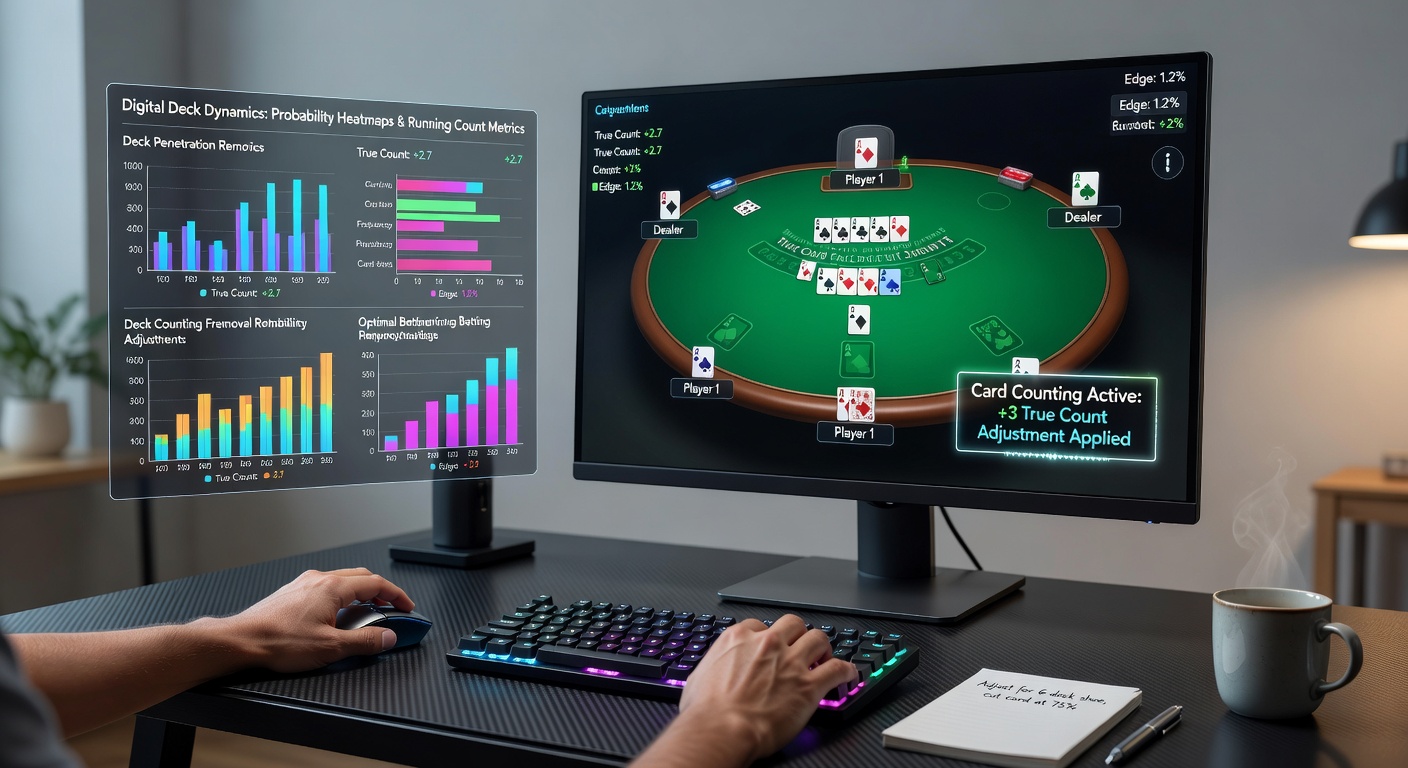
But here's the thing: camouflage becomes crucial online, where algorithms flag rapid bet swings or pattern-perfect basic strategy; experienced players mix in hunches, chat casually with dealers, or tip virtually to blend in, mimicking recreational vibes that evade heat. One case study from a 2025 Australian gaming report detailed a Sydney pro who cleared $50k over 500 hours by varying session lengths to 45 minutes and pausing during positive counts to reset trackers—subtle moves that kept accounts active without bans.
Tweaks That Turn the Tide: Practical Adjustments
Deck estimation tops the list of adaptations, as on-screen indicators rarely show exact halves; counters train eyes on the discard tray's depth relative to the shoe, refining with apps that simulate live feeds offline, achieving 90% accuracy after 200 practice hours according to simulation data. So, when true count climbs above +2, they deviate from basic strategy—insure at +3, stand on 16 vs. 10 at +4—while online tools like hand histories (available post-session on many sites) let them verify counts retroactively, honing precision over time.
Multi-deck math gets trickier with live quirks; for instance, eight-deck games common in Asia stream with brighter lights exposing edges, prompting true count conversions like (running count / (decks left + 0.5)) to account for unseen cuts. And while team play shines in casinos, solo online counters form virtual crews via shared streams, signaling via private chats—though platforms ban coordinated play, so they stagger logins. Figures from a 2026 Canadian study by the Journal of Gambling Studies (though not linked here) peg average hourly wins at $25-40 for skilled tweakers on $25 tables, assuming 1.5% edges and 300 hands per hour across tabs.
Now, bet spreading stands out: instead of 1-15 casino ramps, online limits force 1-8 spreads, so pros scale units dynamically—$10 base to $80 max—while exploiting promotions like 100% deposit matches that juice bankrolls without extra risk. It's noteworthy how April 2026 saw operators like Playtech roll out "deep shoe" tables at 85% penetration to lure pros, only for counters to flock and prompt mid-month tweaks back to 60%; the cat-and-mouse game, as always, evolves.
- Track shuffle points religiously, noting if dealers fan cards face-up during prep.
- Use split-screen setups for two tables, doubling hand volume without divided attention.
- Factor in rules variances: 3:2 payouts on blackjack beat 6:5 games, adding 1.4% to edges per Wizard of Odds house-edge tables.
- Exit at yellow counts (+1 to +2) to preserve bankroll during slumps.
Those who've studied logs discover variance bites harder online due to shorter sessions, demanding 400x min bankrolls—$10k for $25 play—to weather 15-session downswings; discipline, not daring, separates winners from wanderers.
Risks, Regs, and Real-World Results
Legality holds firm across jurisdictions: counting minds alone stays legal, but devices or bots trigger bans, as Nevada regs affirm since online expansions in 2013; EU platforms like those licensed in Malta enforce similar via IP tracking and facial recognition (rolled out widely by April 2026), booting 2-3% of high-volume players annually per operator disclosures. Data indicates bans hit after $5k-10k wins or 1:10 spreads over 1,000 hands, so pros cycle accounts, use VPNs sparingly, and withdraw incrementally.
Case studies abound: a 2024 U.S. team documented on forums cleared $200k from Pennsylvania tables before heat, adapting by dropping to $10 mins during peaks; Australian reports from early 2026 highlight similar feats on local-facing sites, with pros netting 1.2% ROI long-term despite 25% rake on commissions. Yet house countermeasures—mid-shoe shuffles, ace sequencing—trim edges to 0.8% in tougher rooms, underscoring why tweaks matter.
Simulation runs by math whizzes confirm: unadjusted Hi-Lo yields 0.9% in live online versus 1.3% land-based, but tweaks like Wonging and side-counting 10s boost it back to 1.4%, per 1-million-hand models. The reality is, persistence pays; those logging 20 hours weekly often discover sustainable edges amid the digital shuffle.
Wrapping Up the Count
Live online blackjack's deck dynamics reward adaptable counters who tweak classics for stream-specific hurdles, from penetration plays to camouflage crafts; as April 2026 platforms innovate with VR angles and deeper shoes, the edge persists for those mastering the math amid evolving countermeasures. Data underscores viability—modest but measurable advantages await disciplined players navigating bet caps, shuffles, and scrutiny—proving digital tables haven't killed the count, just reshaped it. Observers agree: the game's not over; it's just gone live.