2 Jun 2026
Decoding Recovery Patterns in Packed Schedules to Optimize In-Game Betting Decisions

Recovery patterns in athletes facing packed schedules have become a focal point for in-game betting analysis across multiple sports, where data on rest intervals, travel demands, and physiological markers directly influence live odds adjustments. Researchers tracking fixture congestion in leagues like the Bundesliga and NBA note that teams playing three or more matches within seven days often show measurable declines in sprint speed and decision-making accuracy after the 60-minute mark, creating opportunities for bettors who monitor these trends in real time.
Understanding Fixture Congestion and Its Measurable Effects
Leagues worldwide have seen increased match density since the expansion of domestic cups and international windows, with schedules in 2026 including compressed periods around major events in June. Data from performance tracking systems reveal that players logging over 300 minutes in a 10-day window experience elevated heart rate variability issues, which correlate with higher error rates in high-pressure situations. Observers note these patterns emerge most clearly in back-to-back fixtures where travel exceeds 500 kilometers between venues, as fatigue compounds across defensive and midfield units first.
Studies conducted by sports science departments at institutions such as the Australian Institute of Sport highlight how sleep disruption from late-night travel further alters recovery timelines, leading to slower reaction times that bookmakers incorporate into live betting markets. Those analyzing these datasets find that early halves in congested periods tend to maintain closer scorelines, while second-half spreads widen when one side has logged fewer than 48 hours of full recovery.
Key Physiological Markers for Live Betting Adjustments
Heart rate recovery, GPS-tracked workload metrics, and blood lactate levels serve as core indicators that analysts cross-reference with current match states. Teams displaying incomplete recovery between games frequently concede more shots from distance after the 70th minute, a trend documented in longitudinal reviews of European club competitions. Bettors optimizing in-game wagers often shift focus to total goals or player-specific props once these markers appear in pre-match reports or sideline updates.
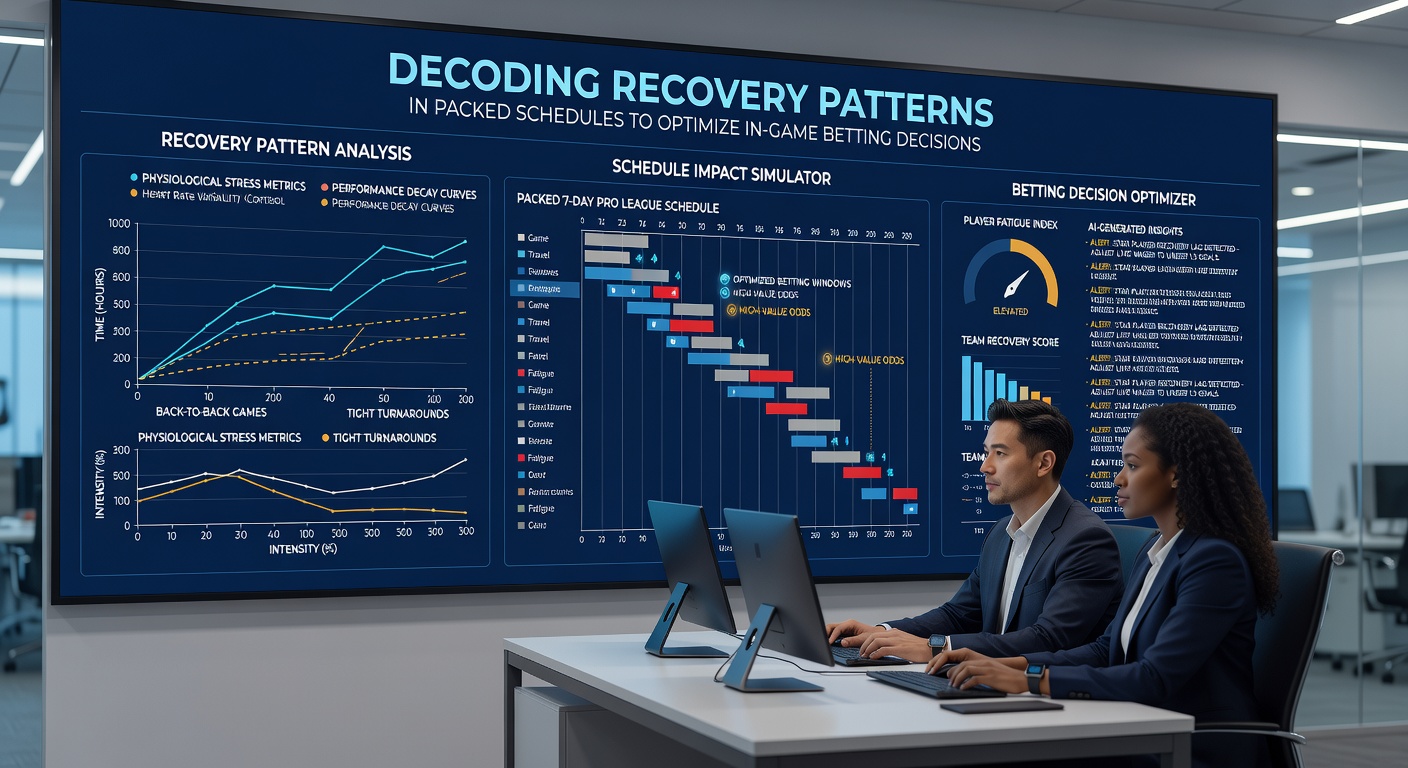
What's notable is how these same patterns extend to individual athletes, where starters who accumulated high physical loads in prior outings show reduced involvement in build-up play. Research indicates that incorporating such variables into models improves prediction accuracy for corner counts and card markets during the latter stages of matches. In June 2026, with several club sides navigating overlapping domestic and continental obligations, these recovery signals are expected to gain even greater weight in live trading rooms.
Applying Recovery Data Across Different Sports
While soccer provides abundant fixture data, similar congestion effects appear in basketball and ice hockey schedules, where back-to-backs without full rest days alter three-point shooting percentages and goaltender save rates. Analysts comparing NBA teams on the second night of a back-to-back find consistent drops in defensive efficiency that live bettors exploit through quarter-specific lines. Those reviewing historical datasets from the 2024-2025 seasons observe that recovery deficits compound most noticeably in the third quarter, prompting market shifts toward under totals in that segment.
External factors such as altitude changes and climate variations further modify recovery curves, according to reports from the International Olympic Committee medical commission. Bettors who integrate these elements with schedule density data achieve more precise timing on in-play entries, particularly when one squad has crossed multiple time zones within the preceding 72 hours.
Practical Frameworks for Integrating Recovery Insights
Effective approaches begin with aggregating public performance logs and travel itineraries released by leagues, then layering on proprietary workload estimates derived from broadcast footage. This layered method allows real-time identification of squads likely to fade, which directly informs decisions on momentum-based markets like next-goal timing or handicap adjustments. Figures from academic reviews in the Journal of Sports Sciences confirm that models incorporating recovery variables reduce variance in live betting outcomes compared to those relying solely on historical form.
Yet the application remains most reliable when cross-checked against on-field indicators such as substitution patterns and visible pacing changes, since official recovery data often lags behind actual match events. Observers following these combined signals report steadier results across multi-leg accumulators built around late-game props.
Conclusion
Decoding recovery patterns within packed schedules supplies a data-driven layer for refining in-game betting choices, supported by physiological tracking and fixture analysis across global competitions. As calendars for 2026 continue to feature dense clusters around international breaks and cup finals, the integration of these metrics into live decision processes stands to grow in relevance for those monitoring performance trends systematically.