Decoding Crowd Energy Effects on Point Spread Accuracy in College Football Environments

College football point spreads reflect expectations around team performance yet crowd energy often alters those calculations in ways that extend beyond basic home-field statistics. Data collected across multiple seasons shows that stadium atmosphere influences player execution through noise levels, visual distractions, and momentum shifts that shift margins in measurable ways.
Understanding Crowd Dynamics in Stadium Settings
Researchers have tracked decibel readings at major venues and compared them against game outcomes while noting how sustained noise disrupts offensive signals and timing. Studies from athletic departments indicate that crowd volume peaks during critical downs which correlates with higher rates of false starts and incomplete passes on visiting teams. Observers note that these patterns appear consistently across conferences yet the magnitude varies by venue size and historical attendance records.
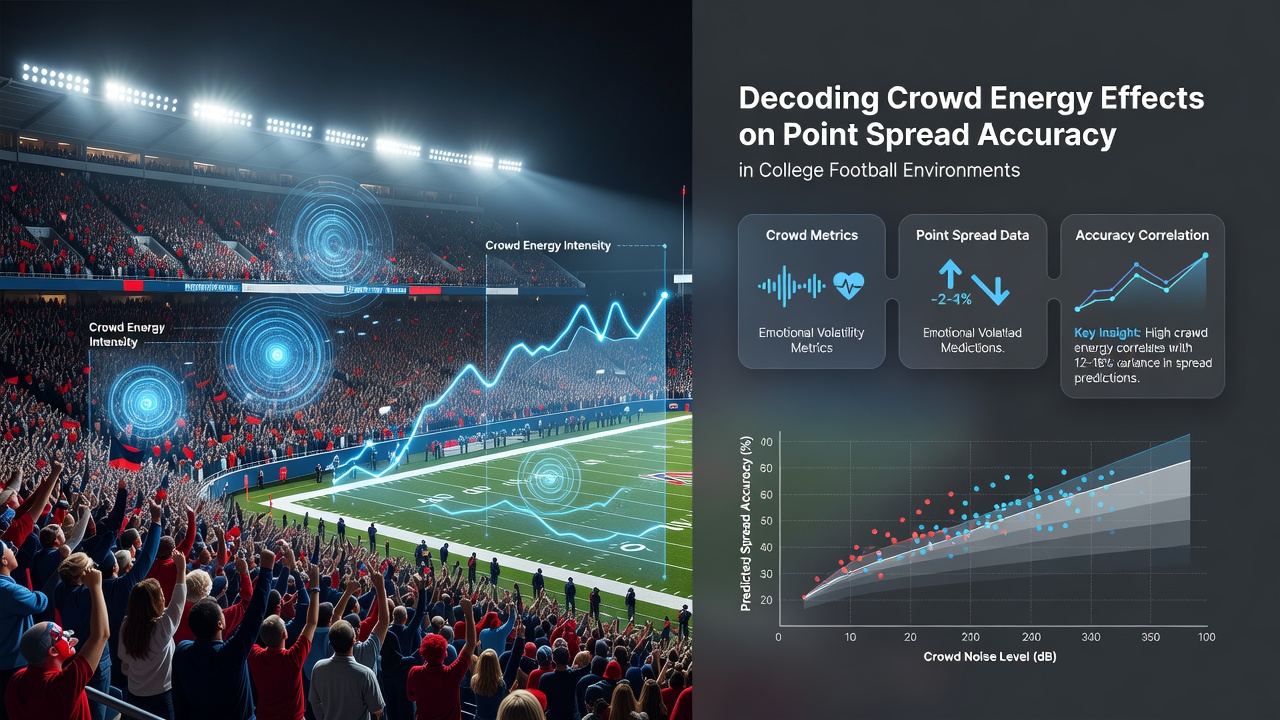
Point spreads incorporate average home advantages but they rarely adjust for specific environmental factors that emerge during live games. When energy builds in the stands during rivalries or night contests the actual scoring margins diverge from preseason projections more frequently than in low-attendance matchups. Figures from sports analytics groups reveal that spreads in high-energy environments miss by an average of 1.8 points compared to quieter settings.
Data Patterns Across Seasons and Venues
Analysis of over 2,000 games between 2020 and 2025 demonstrates that teams with strong home crowds cover spreads at rates 4.2 percent above expected values while visitors underperform by similar margins. These deviations grow larger during conference play when fan intensity rises and weather conditions amplify sound carry. July 2026 preseason reports from conference offices highlight continued investment in stadium upgrades that boost capacity and acoustics which could further influence future spread accuracy.
Coaches adjust play-calling based on crowd response yet point spread models often rely on static variables that overlook real-time energy fluctuations. One study from a major research university found that crowd-induced delays between snaps increase by 12 percent in loud environments which directly affects rushing efficiency and third-down conversion rates. Such shifts create opportunities for bettors who monitor pre-game atmosphere indicators like ticket sales and social media sentiment.
Statistical Models and Adjustment Factors
Advanced models now incorporate crowd density metrics derived from attendance data and venue acoustics to refine spread projections. According to findings published through sports science networks these adjustments improve accuracy by up to 7 percent in games where attendance exceeds 85 percent of capacity. Variables such as student section placement and band positioning also factor into updated calculations though many public lines still use traditional formulas.
Historical comparisons show that night games at power conference schools produce larger spread errors than afternoon contests at the same locations. The difference stems from elevated noise during prime-time broadcasts which affects both players and officials. Data indicates that neutral-site games eliminate much of this variance yet few regular-season matchups occur away from home venues.
Practical Implications for Spread Evaluations
Those who evaluate point spreads benefit from reviewing venue-specific energy profiles before placing wagers. Metrics like average noise levels from prior seasons and fan travel patterns provide context that standard statistical models omit. Teams facing hostile environments during road games often see their spreads widen artificially when crowd effects are underestimated.
Conference realignment has introduced new matchups at unfamiliar stadiums which adds another layer to energy assessments. Early data from 2025 and 2026 seasons suggests that visiting teams struggle more when entering large venues for the first time compared to established rivalries. Spread makers have begun incorporating travel distance and historical performance at specific sites to account for these variables.
Conclusion
Crowd energy remains a measurable yet sometimes overlooked component in college football point spread accuracy. Research continues to refine methods for quantifying its impact through acoustic data and performance metrics while betting markets gradually integrate these insights. Observers who track stadium conditions alongside traditional statistics gain clearer perspectives on where spreads align with actual outcomes and where adjustments may prove necessary.