Climate Shifts Prompt Dynamic Changes in Live Racing Decisions Globally
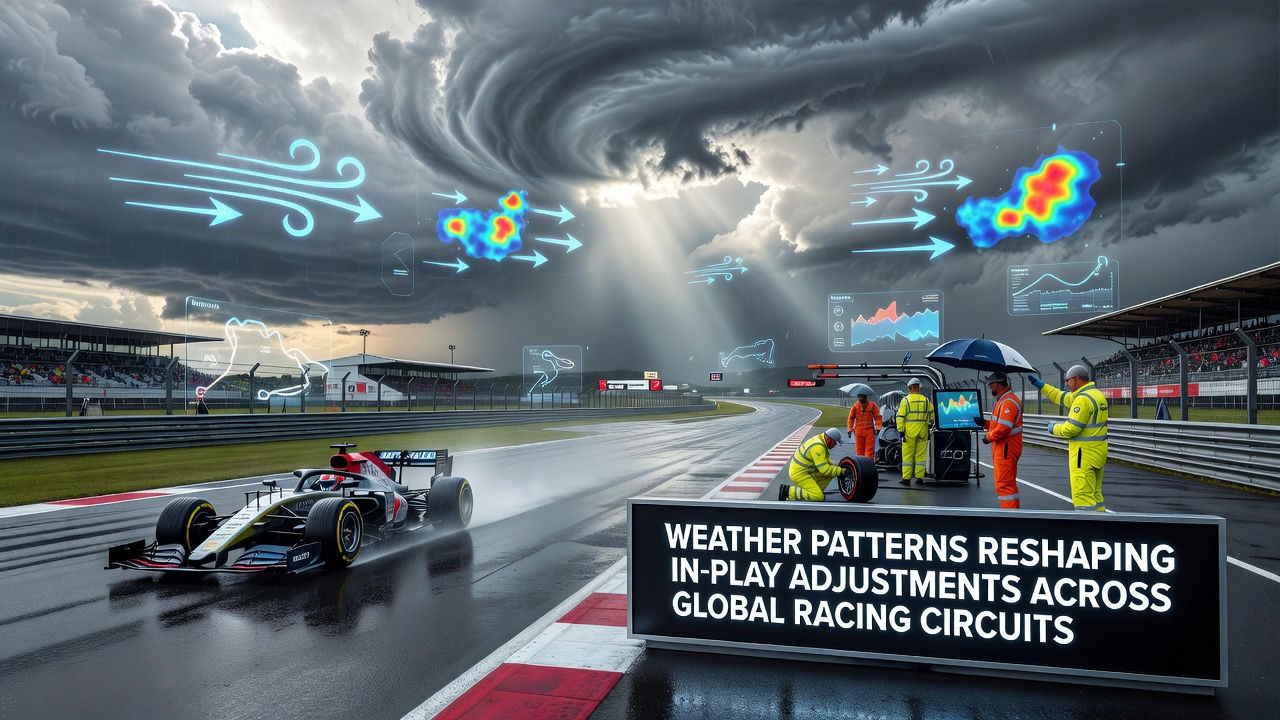
Weather patterns across major racing circuits have shown measurable shifts in recent years, with data indicating increased variability in temperature, precipitation, and wind conditions that directly affect race-day decisions. Circuits from Europe to North America and Asia have recorded these changes through meteorological monitoring systems, and teams respond by updating tire selections, fuel loads, and driver instructions during events.
According to records from the World Meteorological Organization, average temperatures at European venues rose by 1.2 degrees Celsius between 2015 and 2025, while precipitation events grew more intense yet shorter in duration. These trends force race engineers to monitor live feeds and issue adjustments within minutes of observed changes, rather than relying solely on pre-race forecasts.
Regional Variations in Weather Influence
North American circuits such as those used in IndyCar series experience frequent afternoon thunderstorms during summer months, and teams have developed protocols to switch to wet-weather setups based on radar data updated every five minutes. In contrast, Australian events often contend with sudden wind gusts that alter aerodynamic balance, prompting immediate suspension and wing adjustments communicated over team radios.
Asian circuits, including those in Japan and Singapore, report rising humidity levels that affect engine cooling and tire degradation rates. Observers note that humidity spikes above 80 percent correlate with a 15 percent increase in pit-stop frequency during the middle stint of races, based on performance logs compiled by series organizers.
Real-Time Data Integration and Strategy Updates
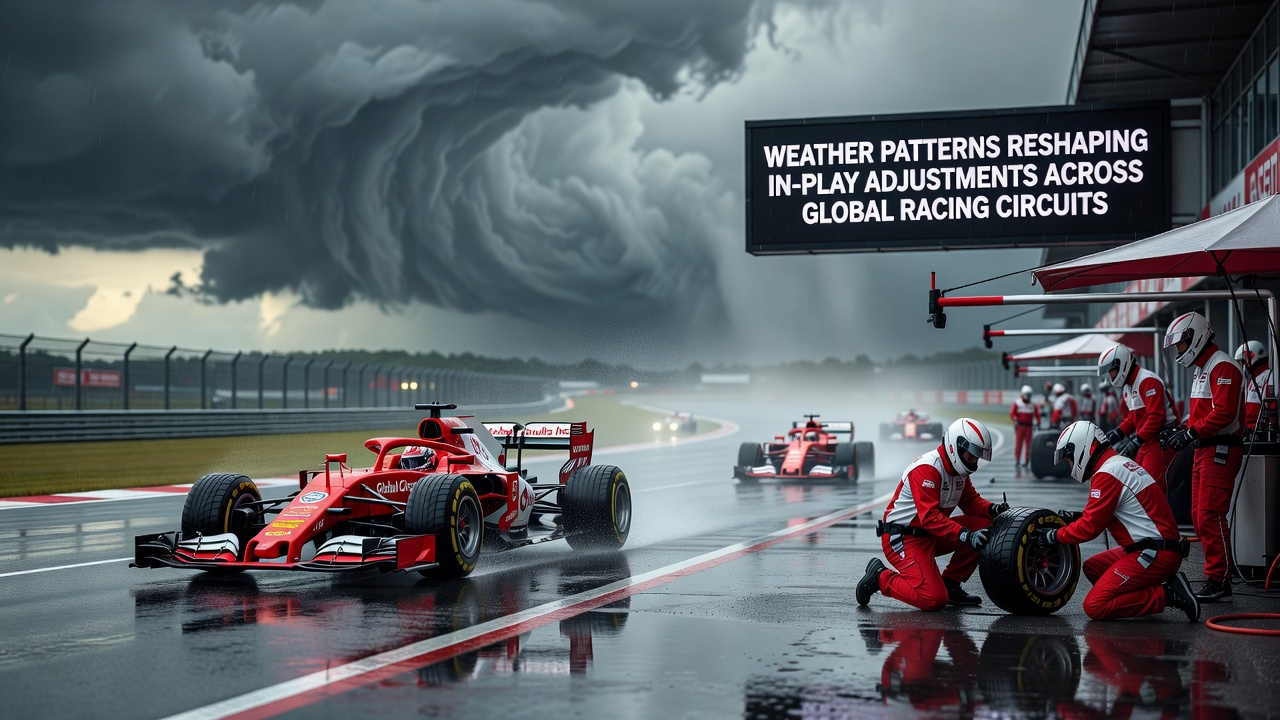
Teams integrate satellite imagery, ground sensors, and onboard telemetry to detect microclimates that develop over short distances on the track. When a front approaches, engineers calculate revised lap times and recommend earlier pit stops or altered driving lines, actions that can shift expected outcomes within a single sector. Research from academic institutions tracking motorsport performance shows that circuits with elevation changes amplify these effects, as cooler air at higher points interacts differently with warmer surface temperatures.
June 2026 events at several European venues demonstrated these dynamics when unseasonal rainfall arrived 45 minutes ahead of predictions, leading multiple squads to call for intermediate tires while leaders remained on slicks for one additional lap. The resulting time gaps widened by up to eight seconds per lap in affected sectors, according to timing sheets released after those meetings.
Equipment and Regulatory Responses
Manufacturers have introduced tires with faster heat-up characteristics to handle fluctuating track surfaces caused by passing showers, while series regulators have updated safety car deployment thresholds tied to visibility metrics. These modifications appear in technical bulletins distributed before each season, yet the application still depends on conditions encountered during the event itself.
Wind patterns at coastal venues introduce additional variables, with gusts exceeding 40 kilometers per hour forcing recalibration of brake bias and throttle mapping. Data collected across multiple seasons indicates that such adjustments occur on average three times more frequently now than in the early 2010s, reflecting broader atmospheric instability.
Global Circuit Comparisons
Desert-based circuits in the Middle East contend with sandstorms that reduce visibility and clog air intakes, requiring rapid engine mapping changes, whereas alpine tracks face rapid temperature drops at dusk that stiffen rubber compounds. Each location maintains dedicated weather stations operated in coordination with national meteorological services, feeding continuous streams into team command centers.
Analyses published by the Fédération Internationale de l'Automobile highlight how these localized responses contribute to overall race strategy evolution, with simulations run during events incorporating fresh inputs every 30 seconds. The resulting decisions affect not only individual team performance but also safety protocols applied uniformly across the field.
Conclusion
Shifting weather systems continue to reshape the timing and nature of in-play adjustments at racing circuits worldwide, supported by expanded sensor networks and refined communication protocols. Records from 2025 and 2026 illustrate consistent patterns of earlier interventions and more frequent equipment changes, driven by observable meteorological trends rather than isolated incidents. These developments remain grounded in data collected across diverse geographic regions and regulatory frameworks.