Altitude Variations Shaping Stamina Outcomes in Transnational Soccer Encounters
Riley Powell · Aug 13, 2026
Altitude Variations Shaping Stamina Outcomes in Transnational Soccer Encounters
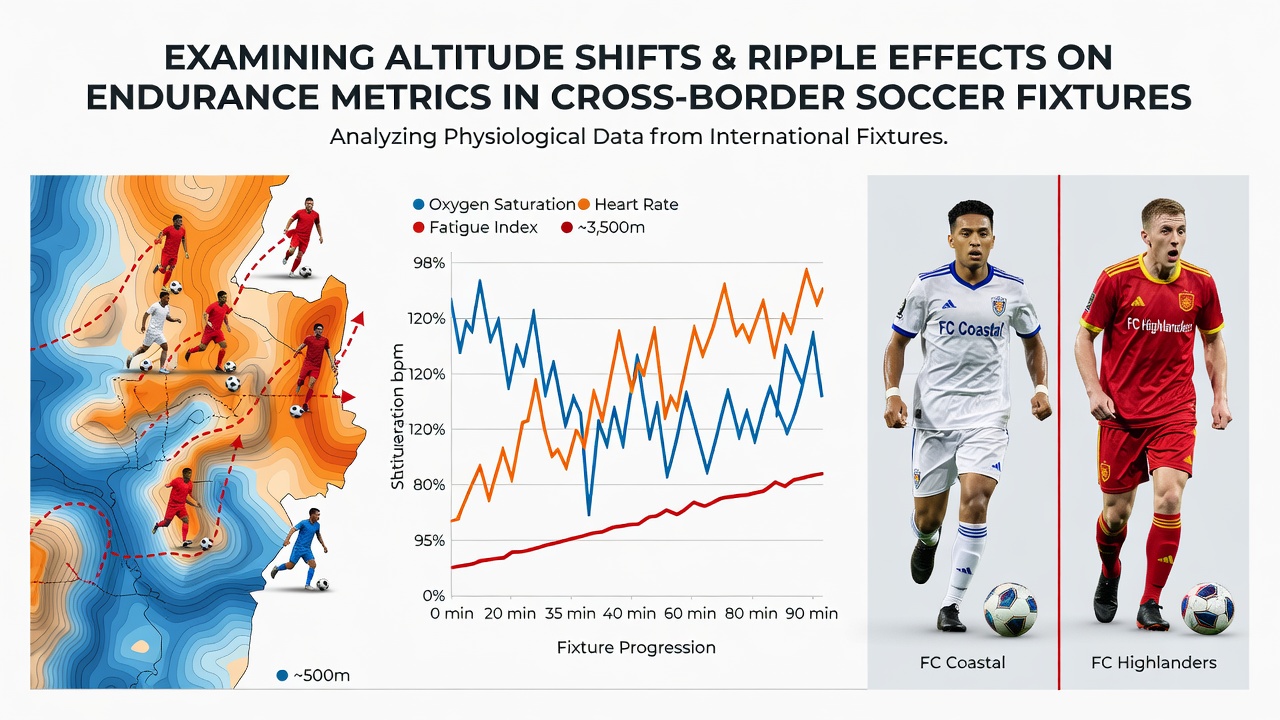
Teams traveling between venues at markedly different elevations often encounter physiological adjustments that alter how players sustain effort across full matches, and data from multiple competitions illustrate these patterns through tracked metrics such as total distance covered, high-intensity running bursts, and recovery intervals between sprints. Researchers have documented oxygen availability declines at higher elevations, which force cardiovascular systems to work harder while maintaining the same workload, and this dynamic becomes especially pronounced when squads cross borders between coastal lowlands and Andean plateaus or between European plains and mountain regions.
Physiological Mechanisms at Play
Reduced partial pressure of oxygen at elevations above 2,000 meters triggers increased heart rates and altered breathing patterns, yet athletes who arrive with limited preparation time show measurable drops in repeated sprint capacity according to physiological monitoring from several South American tournaments. Studies conducted by institutions in Bolivia and Peru have quantified these changes, noting that players from sea-level clubs cover approximately 8 to 12 percent less ground in the final 15 minutes of matches when competing above 3,000 meters without prior acclimatization periods. European federations have recorded similar trends during Champions League qualifiers involving teams from varied topographies, where endurance indicators such as average speed maintenance decline steadily after the 60-minute mark in elevated stadiums.
Cross-Border Fixture Patterns
Fixtures that pit lowland clubs against highland opponents create asymmetric demands because home squads benefit from chronic adaptation while visitors must adjust within days, and Copa Libertadores records from 2024 through early 2026 demonstrate consistent gaps in second-half work rates between these groups. One analysis of matches involving Bolivian sides at 3,600 meters versus Argentine or Brazilian visitors revealed that visiting teams reduced their high-speed running volume by nearly 15 percent after halftime, while local players maintained baseline outputs. August 2026 schedules include several such encounters across the Andes corridor, where travel logistics limit extended preparation windows and therefore amplify the endurance differentials captured by GPS tracking systems.
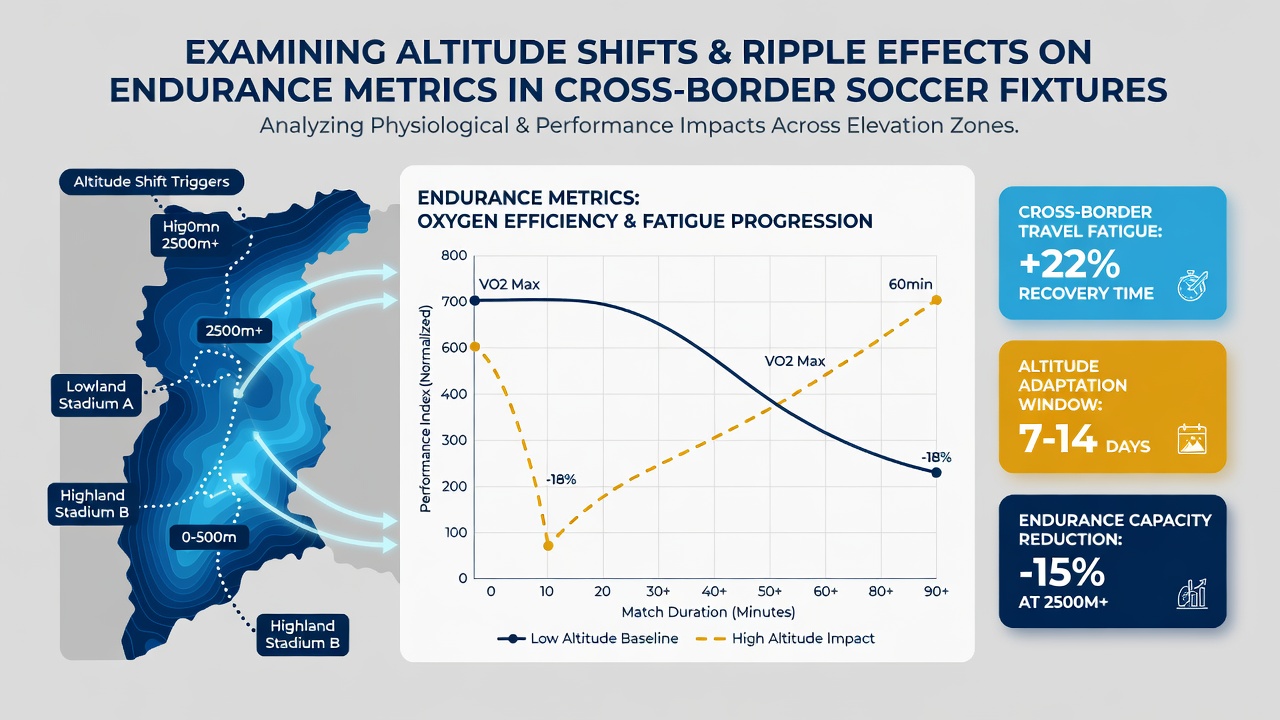
Observers note that recovery strategies, including targeted hydration protocols and timed exposure to simulated hypoxic environments before travel, have narrowed some performance gaps in recent seasons, though complete equalization remains rare. Data compiled by CONMEBOL medical panels show that teams implementing structured acclimatization camps four to seven days prior to elevation matches retain closer to 95 percent of their typical distance metrics compared with those arriving only 48 hours ahead. In contrast, European cross-border games involving venues like the Swiss Alps or certain Eastern European highlands produce milder but still detectable shifts, primarily affecting players with limited prior exposure to moderate elevations around 1,500 meters.
Endurance Metrics and Measurement Approaches
Modern tracking technologies capture granular variables including meters per minute, number of accelerations above 3 meters per second squared, and heart-rate zones sustained over 85 percent of maximum, and these datasets allow direct comparisons across altitude gradients. Research from Australian sports science groups collaborating with South American clubs has established baseline thresholds, indicating that a 1,000-meter elevation increase typically correlates with a 5 to 7 percent rise in perceived exertion for equivalent workloads. FIFA technical reports further document how these adjustments influence substitution patterns, with coaches opting for more frequent changes in the later stages of high-altitude fixtures to preserve overall team output.
Coaches and analysts examine historical match files to identify which players exhibit the steepest declines in endurance markers, and this information informs squad selection for upcoming cross-border fixtures. Longitudinal studies spanning multiple seasons reveal that repeated exposure across a campaign can produce partial adaptation even without dedicated camps, although individual variability remains high depending on genetic factors and baseline fitness levels. Metrics collected during 2025 international windows already hint at evolving preparation standards ahead of denser 2026 calendars that feature additional transcontinental travel.
Conclusion
Altitude differentials continue to register clear effects on endurance metrics whenever soccer teams cross borders between regions of contrasting elevation, and ongoing data collection from federations and research bodies supplies increasingly precise quantification of those impacts. Teams that integrate elevation-specific preparation maintain more consistent performance profiles, while those relying on minimal adjustment periods encounter measurable reductions in work rate during decisive match phases. Continued monitoring through established tracking systems will supply further detail on how these environmental variables interact with tactical and physical demands across future schedules.