6 Aug 2026
Altitude Factors in Scoring Trends for South American League Bettors
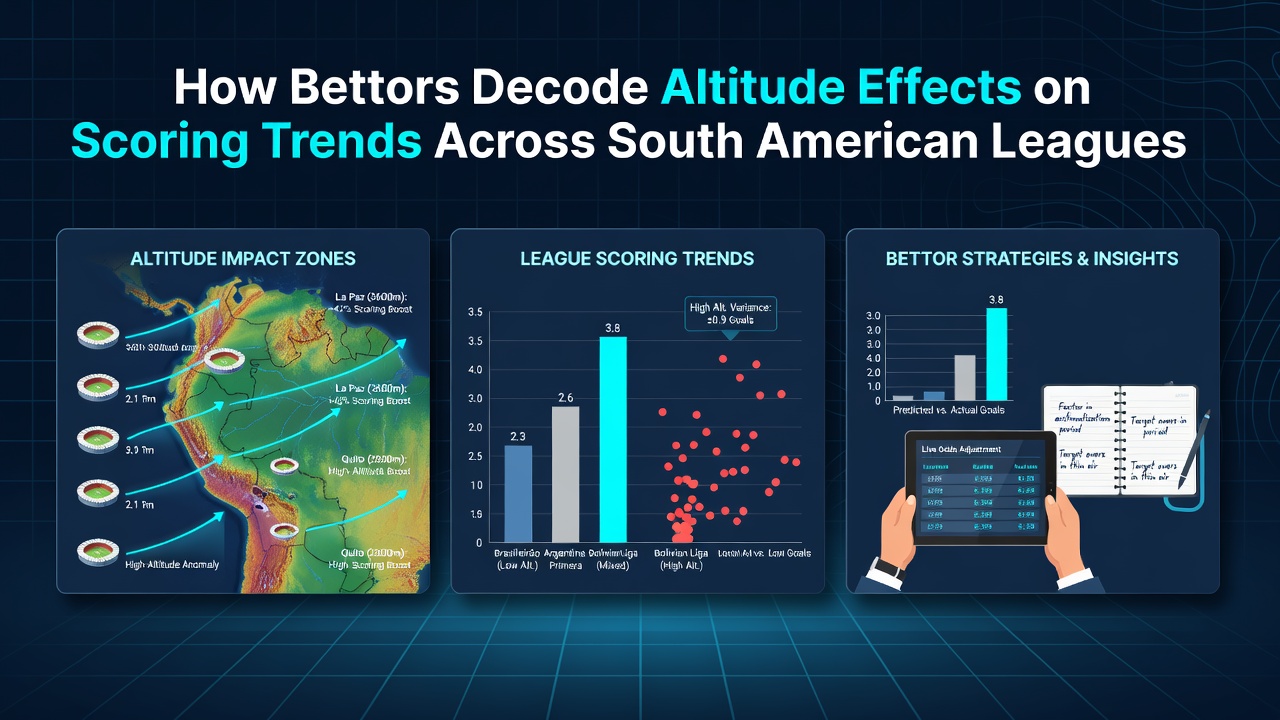
High-altitude venues across South America create distinct conditions that shape goal outputs in domestic leagues, and those who track these patterns compile historical match data from stadiums in Bolivia, Ecuador, Peru, and Colombia to identify repeatable edges. Teams based above 2,500 meters often record different scoring rates at home compared to lower-elevation opponents, while visiting sides from sea-level locations show measurable drops in output during the opening 30 minutes of play.
Geographic Distribution of Venues
League schedules place clubs in cities such as La Paz at 3,650 meters, Quito at 2,850 meters, and Cusco at 3,400 meters against sides from Buenos Aires, Montevideo, and Rio de Janeiro at near sea level. Records kept by national federations show that home sides in these elevated stadiums average between 0.4 and 0.7 more goals per match when both teams come from lower elevations, whereas matches between two high-altitude clubs produce narrower margins and fewer total goals.
Data Sources and Tracking Methods
Analysts gather box-score information from the past eight seasons across the Bolivian Primera División, Ecuadorian Serie A, and Peruvian Liga 1, then segment results by elevation brackets. They cross-reference these figures with player travel logs and acclimatization periods to isolate the effect of altitude from other variables such as weather or pitch quality. One dataset released by the South American Football Confederation in early 2026 indicated that visiting teams required at least 72 hours of adaptation before goal differentials returned to baseline levels.
Impact on Match Statistics
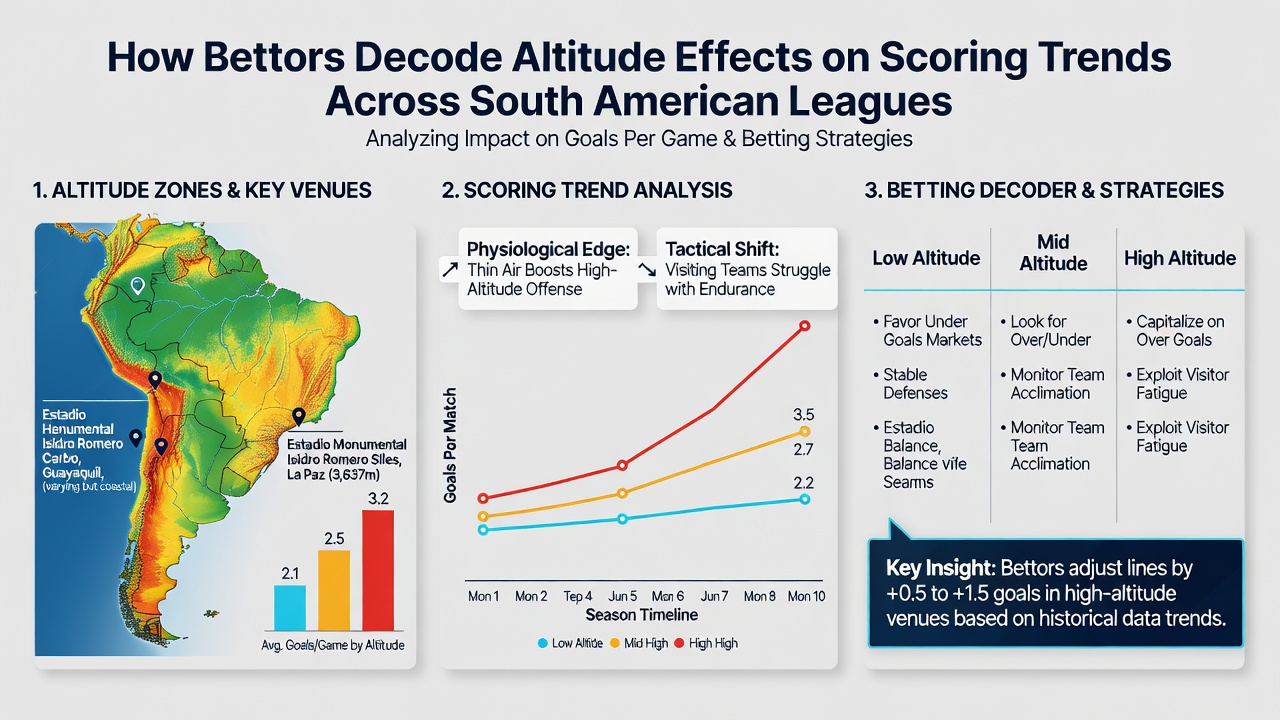
High-altitude conditions reduce oxygen availability, which shortens sprint distances and reduces the number of high-intensity runs after the 60-minute mark. Consequently, matches in La Paz and Quito display lower shot volumes in the final 30 minutes, yet set-piece goals increase because defending teams tire faster. Those who compile expected-goal models adjust their inputs for these venues, lowering projected totals by 12 to 18 percent when a low-altitude side travels upward.
League-Specific Patterns
In the Bolivian top flight, clubs playing at home above 3,000 meters have posted a 64 percent win rate against visiting sides from below 1,000 meters since the 2018 season. Ecuadorian matches in Quito follow a similar trend, though the effect moderates slightly because most visiting clubs travel shorter distances and arrive with partial acclimatization. Peruvian fixtures involving Cusco-based teams show elevated draw rates rather than outright home dominance, because both sides often struggle to maintain attacking tempo after halftime.
August 2026 Observations
During the opening weeks of the 2026 campaigns, several clubs scheduled double-header weeks that included a high-altitude fixture followed by a lowland match. Data collected through late August indicated that teams returning from La Paz or Quito recorded an average 0.9 fewer goals in their subsequent sea-level games, while their opponents at altitude scored at elevated rates during the first half. Bettors monitoring squad rotation noted that managers who rested key midfielders before travel produced more stable defensive numbers upon return.
Practical Adjustments for Trend Analysis
Those who model scoring markets apply elevation coefficients derived from regression analysis of historical results. They weight recent form more heavily when a team has played multiple consecutive matches at altitude and discount older data from pre-acclimatization periods. Additional filters include checking the number of days between matches and reviewing medical reports on respiratory recovery, because these variables correlate with second-half goal tallies.
Conclusion
Altitude continues to produce measurable shifts in goal timing and total output across South American domestic competitions. Observers who maintain segmented databases for elevation brackets, travel schedules, and recovery windows can isolate these effects from broader league trends, and the patterns remain consistent enough that updated models incorporate venue-specific adjustments each season.